

Featured
Trump Accounts: Promises of Growth or Financial Illusions?
The American president has launched an investment program for children, but economic criticism is strong.
Leggi l’analisiAnalisi, notizie e prospettive per capire ciò che conta.
The American president has launched an investment program for children, but economic criticism is strong.
Leggi l’analisi
Tech companies are accelerating convergence towards advanced computing solutions.

India has surpassed expectations in economic growth, but its main stock benchmarks have been significantly underweighted. The gap between real growth and stock performance is putting global investors in crisis. India's economic situation has been surprisingly positive, with a 7.8% increase in June's fourth quarter, exceeding expectations. According to global broker analyses like Morgan Stanley and Citi, projections for the year through March 2027 have been updated to 7.3%, a significant increase compared to previous 6.7% and 6.9%. This economic explosion occurred despite a difficult global business environment, with high energy prices and geopolitical uncertainties. Prime Minister Narendra Modi publicly declared that the predators of destiny had been defeated and that India has bloomed again, reflecting an optimistic view of the situation. However, when the markets opened on Tuesday, the Nifty 50 lost 8% from the start of the year, registering another weak session and closing slightly down. This decline represents one of the worst performances of the key indices in the global stock market over the past months. CNBC experts highlighted a severe concentration of major stock indices, which are heavily concentrated on financial services and IT titles, failing to capture the growing economic activity in emerging sectors like manufacturing, fintech, and consumer technology. The weakness of headline indices was driven by weak performance in some major names, while small and medium-sized stocks showed much better returns. Indian banks are taking on reduced lending risks, while non-banking financial companies, which are underrepresented in the Nifty 50, are extending loans to unbanked segments, such as micro-enterprises, rural consumers, and used car buyers. Similarly, IT companies are facing revenue and margin problems, creating a significant gap between real economic growth and the financial results of major companies. The disconnect between the economy and stock markets suggests that the dominant names in the Nifty 50 do not adequately reflect emerging economic activity, leaving room for a more fragmented stock market. Analysts indicate that small and medium-sized stocks have performed much better, suggesting that economic growth is concentrated in specific sectors not adequately represented by major indices. The current situation puts global investors in crisis, who see India as a unique case of economic growth without corresponding stock performance. This scenario could lead to a correction in Indian stock prices in the future, with investors potentially shifting their capital towards markets with more solid and predictable performance. The next expected developments will depend on the ability of IT companies and financial services to recover lost margins, while banks will continue to extend loans to new market segments. The company has communicated that economic growth is supported by an increase in consumer demand and investments, but the demand for stock titles has remained stagnant. The data shows that the Indian economy is in good health, but the stock market does not seem able to reflect this economic reality.

Oracle is facing a liquidity crisis linked to the development of large data centers for artificial intelligence.

The Volkswagen Group has formalized a global restructuring plan aimed at cutting over 50,000 jobs.

The INPS has issued new bonari notices for artisans and businesspeople who do not comply with deadlines for fixed contributions, with immediate consequences on payment and regularization.

Mediobanca Research has confirmed a positive market judgment for Unicredit, suggesting that Italy is the necessary turning point to transform the bank into a true European player.

Brt's industrial strategy has been revised following judicial administration, shifting focus from volume to service quality. CEO Stefania Pezzetti stated that the new economic context requires more prudent goals, with a 2029 growth target dropping from 20% to between 10% and 13%. The 2025 fiscal year ended in a loss despite slightly higher revenues than the previous year, while 2026 is expected to generate nearly 2 billion in turnover. In a market where parcel revenue tends to decline, Brt is choosing to focus on segments where it believes it has a competitive advantage, specifically heavier and more complex shipments. The transformation involves the logistics chain, with a drastic reduction in suppliers from over 2,000 to around 150, introducing periodic controls to avoid new problems. Unlike competitors who were terminated under investigation for allegations of forced labor, Brt has introduced a more controlled work model. In parallel, 2,000 warehouse operators were internalized, and months under controlled administration were a stimulus to look more closely at processes and procedures. Brt's growth will increasingly come from abroad, with 10% of the 220 million parcels moved annually that cross borders. Integration into the French Geopost network offers a platform to support Italian SMEs on European markets, with revenue estimates of 15.8 billion and 2.2 billion deliveries in 2025. The Italian network counts between 12,500 and 13,000 fixed points and lockers, while the Fresh service dedicated to temperature-controlled food products doubled its revenue in a year, despite starting from small numbers. In the background remains a broader issue, which Pezzetti defines as 'the whimsy of logistics,' where the race for ever-faster deliveries has compressed prices and margins. It is necessary to begin restoring dignity to the work of the express courier, the transport, and the logistics, with a 2029 growth target dropping from the 20% projected last year to an indication between 10% and 13%. The transformation strategy initiated by the Italian logistics company remains the keystone of the revival, but the new context imposes more prudent goals: the 2029 growth target drops from the 20% projected last year to an indication between 10% and 13%.

Current geopolitical tensions are significantly altering global market dynamics.

The yen surged 1.2% against the dollar, prompting extreme market caution.

HDFC Bank stock prices remained flat on the market following a significant reduction in lending costs.

The technology company has decided to delay its stock listing until 2027, marking a fundamental change in strategy for the future of AI.
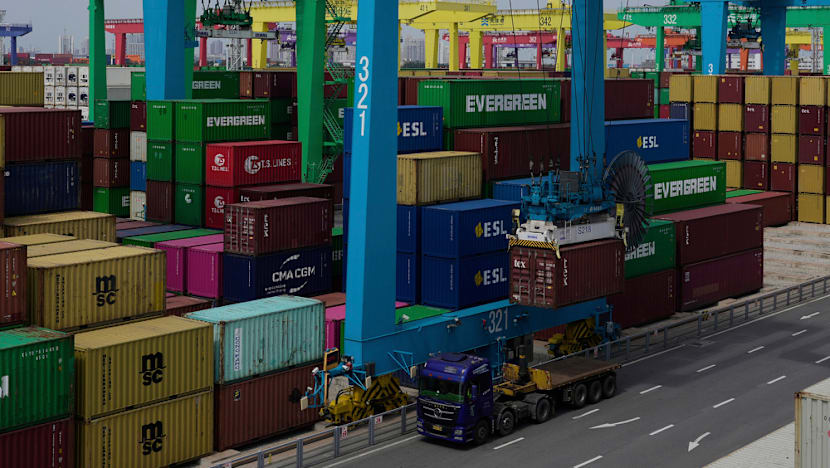
Commercial activities in China reached record levels due to strong global demand for artificial intelligence technologies.