

BMag Signal · In 30 seconds
Critical readWhat happened. The last month of August saw the conclusion of Jeremy Corbyn's government, with Andy Burnham emerging as the new Prime Minister of the Labour Party. This transition brought about a significant change in the country's political direction, but also in its economic outlook. Specifically, Burnham's government announced a budget plan aimed at safeguarding the country's financial stability during the difficult economic conditions currently prevailing.
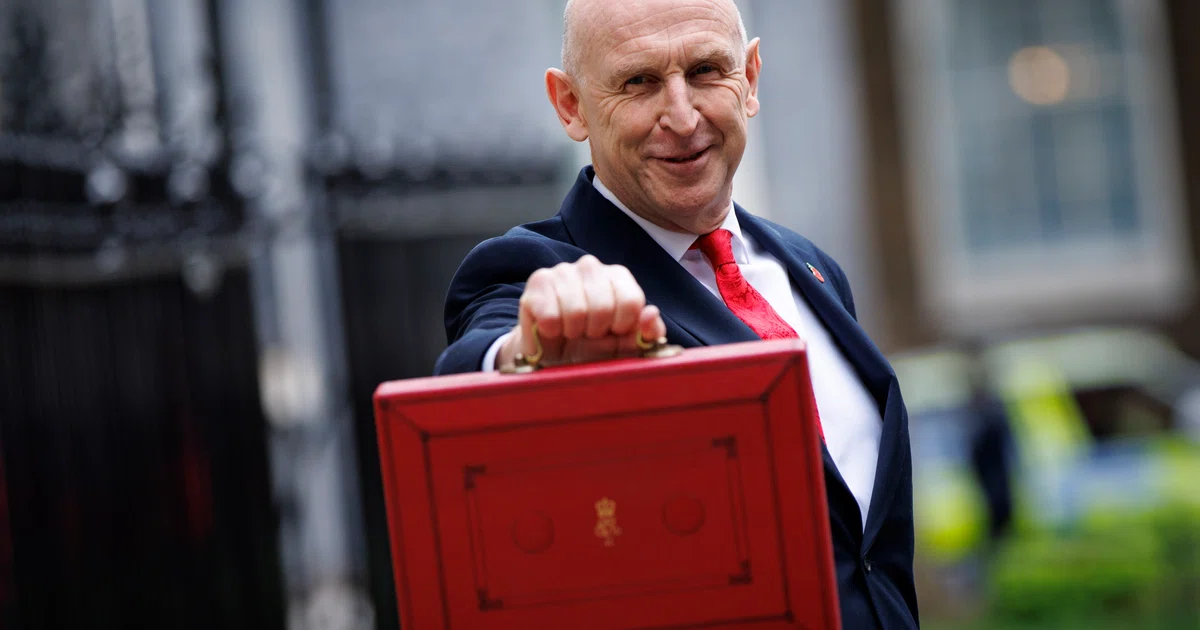
The new government's economic policy focuses on financial security through adapting to difficult global conditions. The Business Times Singapore Economic Award has recognized that Chancellor of the Exchequer John Healey declared his intention to maintain stable fiscal position amid challenging economic circumstances. This was done during a time when the country exceeded its growth forecasts and had to face external economic issues such as the war between the United States and Iran. Healey said that the country’s financial situation would decrease by £15 billion ($20 billion) in 2029-2030 but increase by £22 billion in 2030-2031.
He emphasized that this increase was due to the presence of international conflicts, such as the conflict between the United States and Iran, which had negatively impacted the country's economic conditions. Furthermore, the British government has promised to use part of its financial security quota to cover the costs arising from the war in the Middle East, with the aim of protecting both the country's economy and British families. This approach proves effective for managing global economic challenges, avoiding financial instability caused by external events. However, the British government cannot be completely protected by global economic conditions. The risk remains high, especially if the economic policy of the government fails to meet the expectations of new Prime Minister Andy Burnham.
Furthermore, criticism from the opposition parties of the Conservative Party and the Liberal Democrats could lead to significant criticisms regarding the government's ability to achieve its economic goals. The Economic Award by the Business Times Singapore has recognized that the British government has maintained an apolitical stance towards global economic challenges, demonstrating determination to face these conditions without renouncing its economic prospects. This is a demonstration of strength and determination, which represents an important starting point for the future of this government and financial stability for the country within the context of globalization.
The news that matters, every morning.
Ricevi una selezione ragionata di business, mercati e innovazione.
