
BMag Signal · In 30 seconds
Critical readWhat happened. Government officials from Neuquén will meet investors in New York starting July 20th, with a potential bond offering up to $500 million over five to seven years. After nearly a decade, the province is seeking international capital. The Buenos Aires Times reports that provincial representatives will conduct a roadshow to assess conditions for issuing a new foreign bond, the first issued by the provincial government since 2017.
Starting July 20th, provincial officials will meet investors in New York. On the table, there is a possible bond offering up to $500 million, with a duration between five and seven years. Neuquén will return to seeking capital on international markets after nearly a decade.
According to the Buenos Aires Times, which cites two people with direct knowledge of the dossier, representatives of the Argentine province will travel to New York for a roadshow with investors starting from July 20th. The objective is to verify the conditions for issuing a new foreign bond, the first issued by the provincial government since 2017. The financial structure is still under discussion.
According to the two sources, who have asked to remain unidentified before the start of the meetings, Neuquén would like to obtain a bullet bond: a bond in which the capital is repaid at maturity, rather than through progressive payments. The hypothesized duration is between five and seven years, while the interest rate sought would fall between seven and eight percent. The necessary political step has already been completed.
The provincial legislative assembly authorized the issuance of new bonds for a maximum amount of $500 million. The approval thus establishes the limit of the operation, but it does not mean that the entire sum will necessarily be collected: final size, yield and maturity will depend on the outcome of the comparison with investors and the final decision of the authorities of Neuquén. The return of the province to Wall Street occurs in a particular phase for Argentina.
President Javier Milei, for the moment, avoids bringing the national government back to global financial markets. Some local administrations are instead taking advantage of the optimism of investors in favor of their revision of the economy to issue bonds outside the country. In recent months, Córdoba, Chubut and the city of Buenos Aires, among other Argentine administrations, have sold new bonds abroad.
According to the newspaper, these operations were favored by the reduction of bond spreads. Neuquén could thus join a gradual reopening of international markets for subnational issuers, while the central state maintains a more prudent line on its return to global financing. In the case of Neuquén, however, the call to investors does not depend solely on the national economic framework.
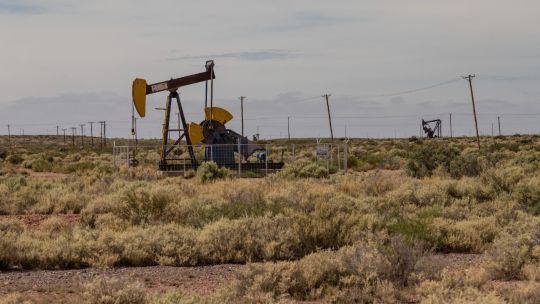
The province hosts a strong expansion of shale oil and gas production in Patagonia. The territory has assumed an increasing importance while energy companies invest billions of dollars and increase extracted volumes. It is on this transformation that the local government can build a significant part of its financial presentation.
The growth of the energy sector has already brought other companies active in the province to turn to global markets. The Buenos Aires Times cites Pampa Energía and Pluspetrol among the companies that have collected funds abroad, taking advantage of favorable expectations on the prospects of Argentine energy. The eventual provincial bond would thus follow operations carried out by both local governments and companies linked to the same industrial cycle.
The expected dimensions of the oil development explain the attention. According to the source, the increase in production is underway towards one million barrels of oil per day by the end of the decade. The data concerns a perspective, not a level already reached, but contributes to giving the province a profile different from that of a local administration lacking a rapidly expanding export sector.
The New York roadshow will serve to measure how much this energy story can translate into concrete financing conditions. The seven-eight percent range indicates the cost at which Neuquén would like to collect money, but the result will depend on investor demand. Also the choice between a maturity of five or seven years could impact the yield and the sustainability of the operation.
Thus, the actual amount of placement, the chosen duration and the final interest rate remain to be clarified. It is not yet certain that Neuquén proceeds with the issuance after the meetings. From July 20th the province will present its project to Wall Street; only the market response will say if the shale boom will be sufficient to bring it back to the international bond market after nine years.
The news that matters, every morning.
Ricevi una selezione ragionata di business, mercati e innovazione.