
BMag Signal · In 30 seconds
Critical readWhat happened. Two of four schools from mainland China that allow their students to take university entrance exams have announced that most of their students scored above average on core subjects.
Due of the four schools from mainland China whose students are allowed to take university entrance exams for Hong Kong have declared that most of their students passed core subjects, scoring better than the city's overall average. The four schools from the Greater Bay Area are the only institutions from mainland China authorized by the Hong Kong Examinations and Assessment Authority to register their students as candidates for the Diploma of Secondary Education (DSE). Students who follow other programs outside these schools indicate pressure competitiveness and demand.
For businesses, it's not just about growing volumes; they count quality revenues, client portfolio retention, and net profit sustainability in the next quarter. In the short term, the decisive factor remains commercial execution: entry times, channels, and market selection may determine whether expansion or contraction occurs. To be admitted into eight public universities in Hong Kong, students must also achieve Level 3 or higher in two optional subjects.
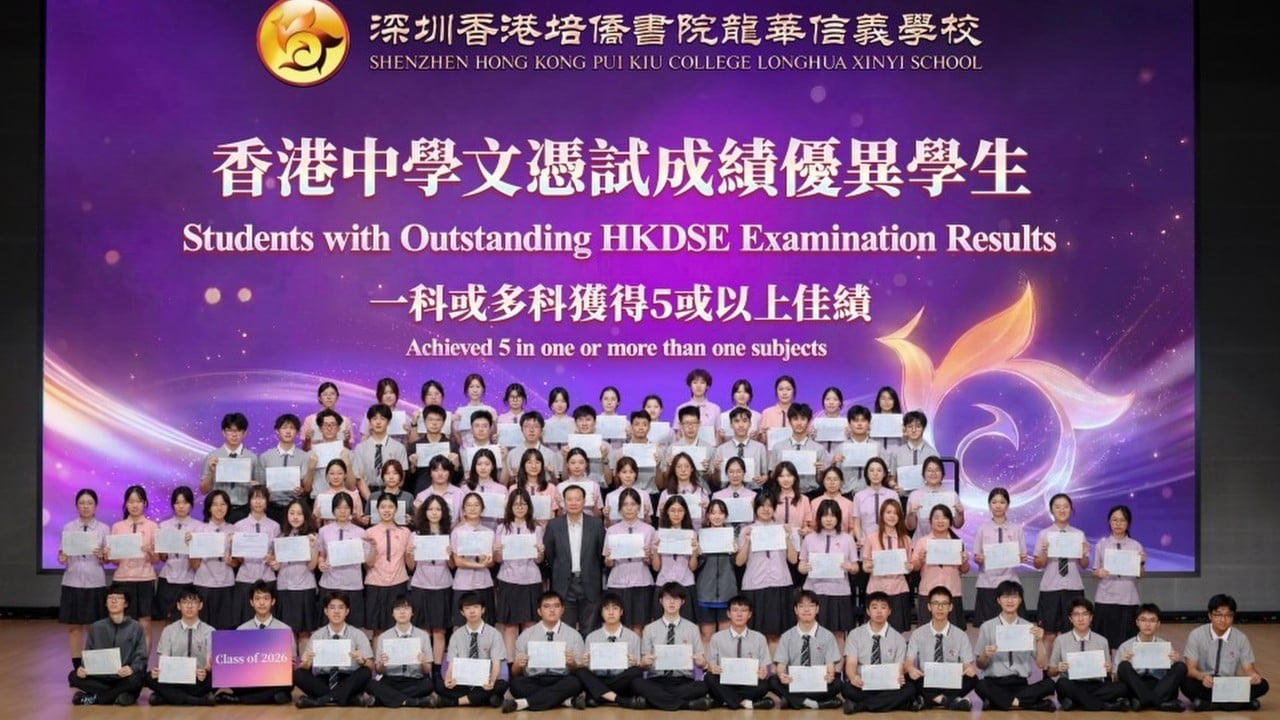
However, none of the four schools has disclosed how many students achieved this level. This year, the percentage of candidate school-dwellers who met minimum admission requirements decreased slightly at 36.8 percent compared to 38.5 percent last year. The Shenzhen Hong Kong Pui Kiu College Longhua Xinyi School reported an 87 percent pass rate on all core subjects, while the Affiliated School of JNU for Hong Kong and Macau Students (ASJNU) of Guangzhou announced a 71 percent pass rate.
These percentages exceeded the overall composite score of 42.7 percent among over 43,000 candidate school-students. The Dongguan ASJNU site did not report its own pass rates but stated that all diplomas had passed admission criteria for university courses from China mainland, Hong Kong, Macao, and Taiwan. Similarly, the Minxin Hong Kong School of Guangzhou only mentioned that more than 90 percent of its students scored well enough to meet admission standards for university courses.
Most core DSE subject evaluations indicate... For businesses, it's not just about growing volumes; they count quality revenues, client portfolio retention, and net profit sustainability in the next quarter. In the short term, the decisive factor remains commercial execution: entry times, channels, and market selection may determine whether expansion or contraction occurs.
The news that matters, every morning.
Ricevi una selezione ragionata di business, mercati e innovazione.