
BMag Signal · In 30 seconds
- Small businesses and job creation in emerging economies suffer when the rules are inconsistent, says Christopher Stephens [SINGAPORE].
- And those companies that operate only in their national markets
- With the PMI creating more than 60 percent jobs in these economies, the overall effect of their struggles with inconsistent rules is
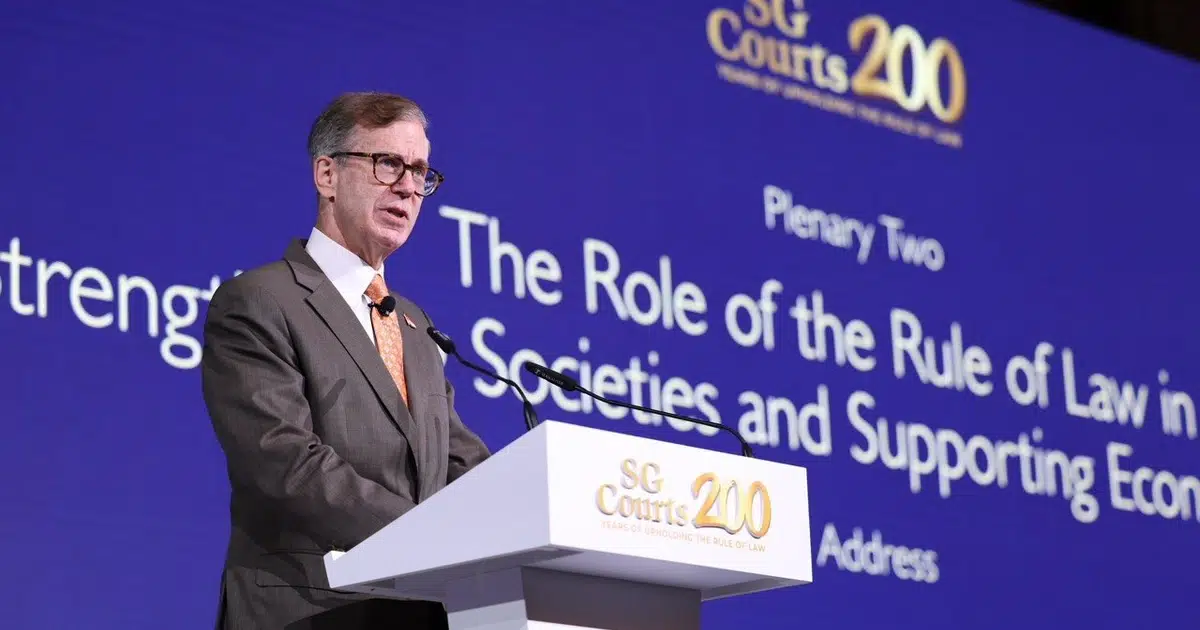
Small businesses and job creation in emerging economies suffer when the rules are inconsistent, says Christopher Stephens [SINGAPORE]. Private capital is fickle and will quickly leave jurisdictions where laws are applied in an unpredictable way, said Christopher Stephens, senior vice president and general council of the World Bank group. Speaking at the Business Times on Wednesday (Nov 25), in the margins of the Global State of Law Conference in Singapore, he said that investors are
And those companies that operate only in their national markets
With the PMI creating more than 60 percent jobs in these economies, the overall effect of their struggles with inconsistent rules is
To ease the compliance burden for PMI, governments can simplify regulations, digitize files and compliance, and accelerate licenses, which they said
Singapore's successful strategy, an emblematic example of urban planning and resource management, is based on a complex web of interconnected factors. In a discussion at the conference, Dr Stephens stressed the importance of a replicable model in other developing countries. His answer, 'We hope it is,' highlighted an ambition of adaptation and learning, not mere imitation. He then proposed a crucial priority: stability, a key pillar for the growth and prosperity of any society. Stability, in fact, is manifested through the confidence of the citizens and the trust in the institutions, essential elements for a solid and stable economy.
Singapore's success is a case study that illustrates the importance of a combination of economic, social and infrastructure policies. Its strategy, which has seen a particular focus on resource management and urban planning, has created a diversified and resilient economy. A key element was the creation of a transparent and efficient governance system, which fostered the confidence of citizens and institutions. Singapore's ability to invest in high-quality infrastructure, such as transport and telecommunications, has contributed to creating an environment conducive to innovation and economic growth. Its management of human capital, with a strong focus on education and training, has also played a crucial role in its long-term success.
The news that matters, every morning.
Ricevi una selezione ragionata di business, mercati e innovazione.