

BMag Signal · In 30 seconds
Critical readWhat happened. Formula 1 is famous for its extraordinary rules that require absolute precision and a great focus on performance. But this very rigidity has also had a positive impact on Shell, the Italian oil company.
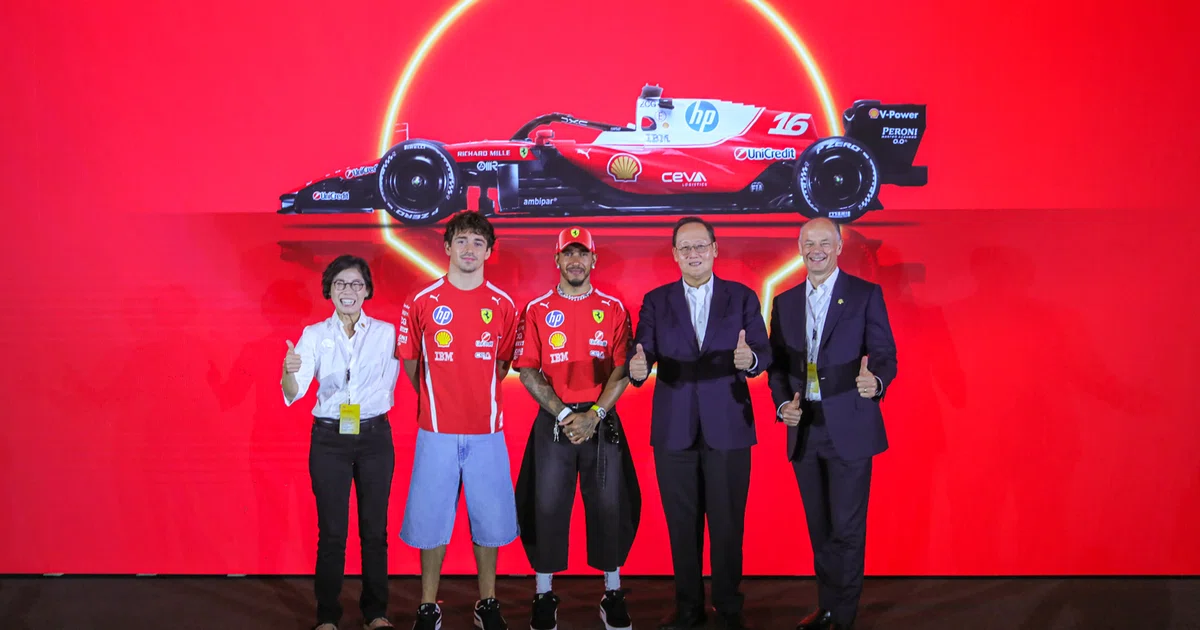
As the strict regulation of Formula 1 allowed Scuderia Ferrari HP to develop new innovative technologies, the team has continued dynamometer tests on new fuels every month, striving to improve engine performance. Dynamometer tests are an important benchmark for Scuderia Ferrari HP, allowing them to create an innovation cycle. Shell invested four years in the development of Shell V-Power race fuel, which required more than two million digital simulations to achieve operational readiness.
This virtual simulation process allowed Shell to accelerate the end-to-end cycle, solving issues such as logistics production and carbon traceability. The dynamic tests carried out in a sporting context have led Shell to apply these tools directly to mass market retail. For Shell, this means that all growth tools used during Formula 1 circuit dynamometer tests are immediately applied to mass market retail.
The collaboration between Scuderia Ferrari HP and Shell has allowed Scuderia to achieve significant results. Charles Leclerc demonstrated that millimeter precision can have a significant impact on the final result, with a difference of 35 thousandths of a second during Malaysia's race. The success of Shell V-Power is also due to the effective integration of ideas between the two partners. 'We want more performance, more safety, and better driveability,' Lewis Hamilton said, adding that 'there are no conflicts or compromises on any front.' But not everything: conflicting priorities can cause a significant slowdown. 'I certainly had experiences where the two drivers did not want the same thing,' Kimi Raikkonen explained, adding that 'when the two people do not want the same thing, they recruit.' The success of Shell V-Power is also due to the energy produced by Scuderia Ferrari HP.
Charles Leclerc stated that 'the team has always sought to improve its engine, increase its safety, and driveability.' This research continues to allow Shell to develop innovative technologies for the retail market.
The news that matters, every morning.
Ricevi una selezione ragionata di business, mercati e innovazione.
