
BMag Signal · In 30 seconds
Critical readWhat happened. A new enogastronomic model is reshaping the relationship between product and experience, with Vinova aiming for 300 units by 2030.
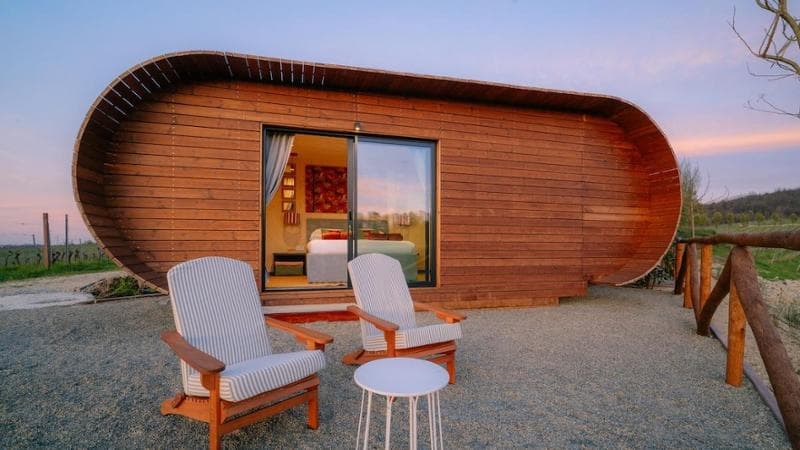
Vinova aims for 300 units by 2030, reshaping the relationship between product and experience. The Genoa-based startup Vinova is installing dedicated structures directly in vineyards, creating a new model of enogastronomic tourism that separates the product from the place of consumption. According to the Italian Enogastronomic Tourism Report 2025, curated by Roberta Garibaldi, enogastronomic stays for foreign tourists in Italy have increased by 176% in the last decade, reaching 760,000 arrivals and 396 million euros in spending in 2024.
This growth contrasts with the stagnation of bottle stockpiles, where bottles remain in storage for longer periods, between high stockpiles and declining consumption. The first two structures are operational since last spring in the Gavi DOCG, the declared goal is to reach 300 across Italy by 2030. The startup has built its business for travelers and tourists who want to fully experience the territory, shifting perceived value from visibility to the quality of time spent in a place.
For an Italian winery, this means the stay becomes the container within which the tasting is sold, not a service added alongside. According to Garibaldi's measurement in the report, the share of foreign tourists on the total number of visits to Italian wineries is on average 31.5%, with interest ranging from 49% to 68% for family-run enterprises. People climbing the vines increase, while people buying bottles remain in storage longer.
The report interprets these numbers as a demand for "experiential intimacy": smaller groups, exclusive tastings, spaces where perceived value shifts from visibility to the quality of time spent in a place. The beauty of the rural landscape is the first criterion in destination selection, indicated by 81% to 88% of tourists in the five analyzed markets: Germany, United Kingdom, United States, France, and the Austrian-Swiss area. The quality of agroalimentari and vitivinicoli products and wines sits in a gap between 52% and 67%, the range of experience offerings between 52% and 69%.
The cup arrives after the place that produces it, and the type of place weighs as much as the product. Family-run enterprises collect interest ranging from 49% to 68%, those hosted in historic manors between 47% and 67%, those designed by contemporary architects between 34% and 60%. The Genoa-based startup Vinova installs its structures in vineyards without investment from the producer, a model that does not intercept Italian demand but perfectly responds to international requests.
The share of foreign tourists on the total number of visits to Italian wineries is on average 31.5%, according to Garibaldi's measurement in the report. The financial statement of an Italian winery shows two moving in opposite directions: bottles remain in storage longer, between high stockpiles and declining consumption. People climbing the vines, instead, increase.
The startup has built its business for travelers and tourists who want to fully experience the territory, shifting perceived value from visibility to the quality of time spent in a place.
The news that matters, every morning.
Ricevi una selezione ragionata di business, mercati e innovazione.