

BMag Signal · In 30 seconds
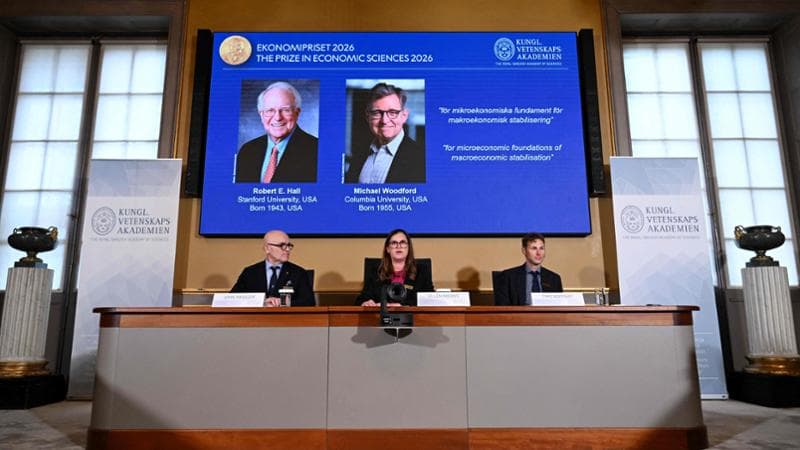
Critical readWhat happened. Two American academies, Robert E. Hall and Michael Woodford, have won the 2026 Nobel Prize in Economics for developing new macroeconomic theories that have improved the ability to apply effective stabilization policies. These theories are based on much of their work being largely dated, but very relevant during a period of energy crisis. Their research has revisited Keynes' theories by looking at individual family and business decisions rather than macroeconomic correlations. According to them, communication is key.
Robert E. Hall and Michael Woodford have been awarded for developing new macroeconomic models that improve fiscal and monetary policy.[P1] Robert E. Hall, 83 years old, studied at Berkeley and the Massachusetts Institute of Technology and defines himself as an 'applied economist'. Throughout his career, he has worked on various topics, including employment, inflation, technology, competition, and economic policy. He proposed a flat tax theory, developed in 1978 together with colleague Alvin Rabushka, which envisages a single, low tax rate for individuals' incomes and enterprises.[P2] Michael Woodford is 71 years old and was educated at the University of Chicago, Yale, and MIT. He is known primarily for writing the book Interest and Prices: Foundations of a Theory of Monetary Policy, considered one of the references for economists and bankers in monetary theory.
The reasons for Hall and Woodford's awards have been recognized for their work that is largely dated but very current during a period of energy crisis. According to the note, they demonstrated how Keynesian models could be In the past, the application of the model proposed by John Maynard Keynes – reducing interest rates and increasing public spending during recessionary phases, and the opposite during expansionary phases – did not succeed in reducing unemployment and fueled inflation. Two economists have revisited Keynes' theories, looking not at the correlation between macroeconomic variables, but at the specific effects of monetary policy on employment and inflation. individual decisions of families and enterprises.
According to them, government communications and central bank statements can influence perceptions of the future and guide the economy. Today, with the energy crisis, the models of Hall and Woodford have become even more important. These works have provided a stable theoretical basis for the models currently used by central banks and governments worldwide, contributing to addressing unemployment and inflation during the oil crisis of the 1970s. The 2026 Nobel Prize highlighted the need to develop new economic theories that respond to global emergencies, such as the current one, making stabilization policies more effective.
The news that matters, every morning.
Ricevi una selezione ragionata di business, mercati e innovazione.
