

BMag Signal · In 30 seconds
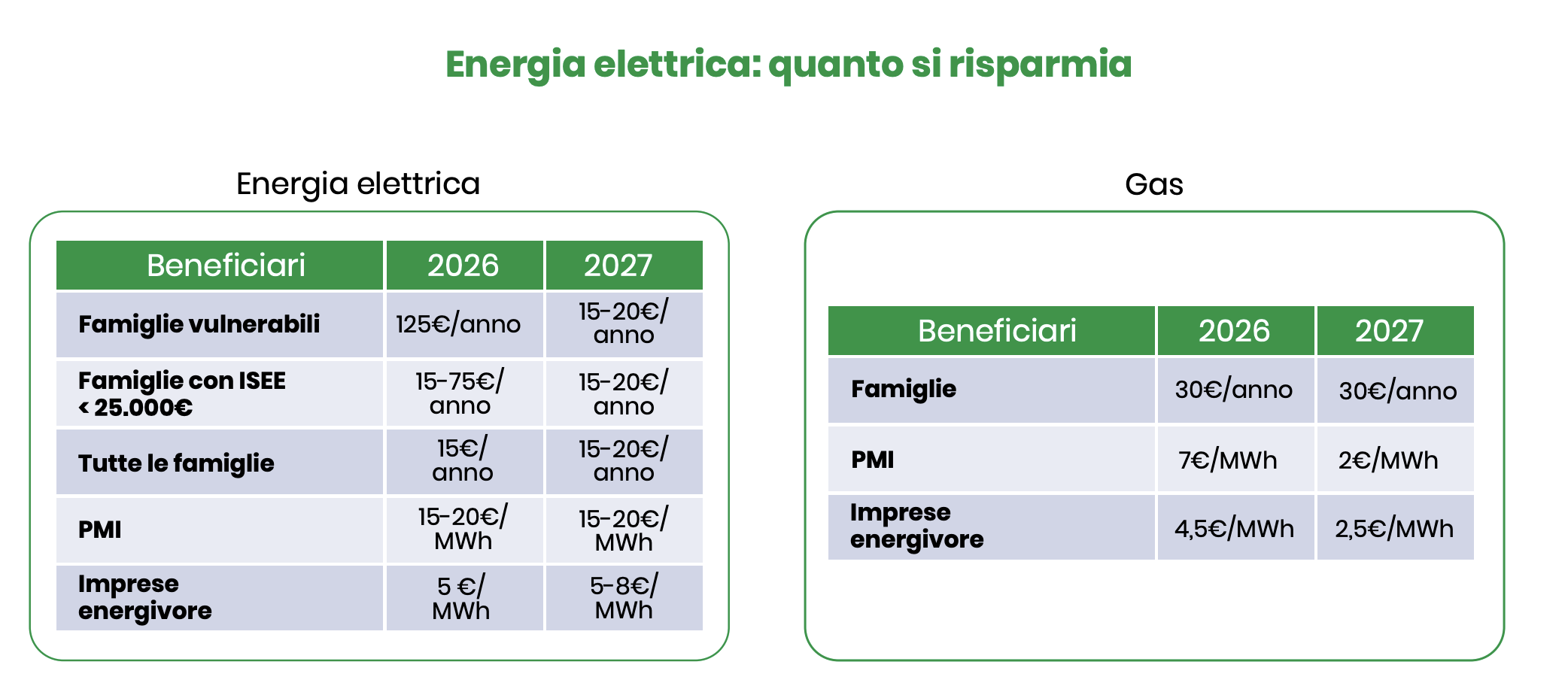
Critical readWhat happened. The Decree Bollettas 2026, already converted into law, returns to the center of debate between Italian government and European Commission. Brussels has confirmed that it is close to an agreement on the measure aimed at reducing the burden of ETS costs on electricity prices, still subordinate to final verifications. In summary: the Decree Bollettas 2026 (DL. n. 21/2026) converted from Law n. 49/2026 provides for an automatic contribution of 115 euros to electric energy bonus holders as of February 21 (ARERA n. 81/2026/R/eel); the discount for.
The Italian measure aimed at reducing the costs of ETS emissions will be approved at an advanced stage with the European Commission. [Source P1] The Decree on Bills 2026, already converted into law, returns to the center of debate between the Italian Government and the European Commission. Brussels has confirmed that there is a consensus on a measure aimed at reducing the burden of ETS costs on electricity prices, still subject to final verification. In summary: the Decree on Bills 2026 (DL. n. 21/2026), converted from Law n. 49/2026, provides for an automatic contribution of €115 to electric energy beneficiaries who are entitled to social bonuses by February 21st (ARERA decree no. 81/2026/R/eel). The discount for families with ISEE up to 25 thousand euros depends on the adoption of suppliers (Article 1, DL. n.).
21/2026 benefits from electric grid burdens reduction; the European Commission indicates an upcoming agreement regarding ETS costs (October 14th 2026 Decree Bollettas 2026, near EU agreement on reducing ETS costs The European Commission confirmed on October 14th 2026 that it is advancing the comparison with Italy concerning the amount of the Bollettas aimed at reducing the impact of ETS electricity prices formation price). The proposed solution would be compatible with European rules according to statements made by a Commission spokesperson reported by ANSA, although requiring the completion of final checks. The mechanism, provided for in article 6 of DL
The Italian government has proposed a solution that envisages neutralizing the increase in electricity costs due to the higher cost of natural gas. In the decree on bills, the Italian government plans to shift the European Emissions Trading Scheme tax (ETS) for power producers using natural gas onto consumer energy bills. This way, wholesale electricity prices would decrease (which is mainly determined by natural gas prices in Italy), resulting in a greater reduction than an increase in bill prices for consumers. This shift should be approved by the EU, since ETS falls within its competence. According to sources from the MASE, the agreement reached with the Commission stipulates that
The news that matters, every morning.
Ricevi una selezione ragionata di business, mercati e innovazione.
