

BMag Signal · In 30 seconds
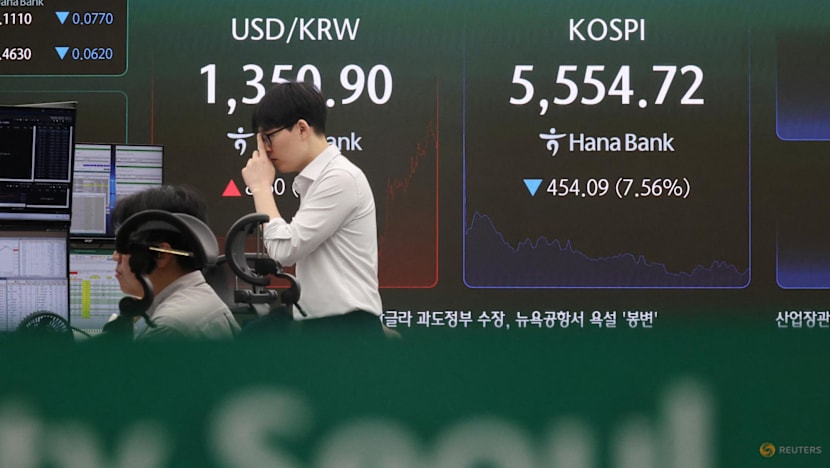
Critical readWhat happened. The Asian market has been profoundly influenced by the international economic crisis that has caused negative changes in the product sector. This crisis has resulted in a significant reduction in transaction volume and a strong tendency towards the depreciation of the Asian currency.
The economic crisis has led to a series of negative changes in the Asian markets. The important technology industry has suffered a great loss of confidence, with the leading chipware companies (Samsung, SK Hynix) facing a series of significant losses. Additionally, the depreciation of the Asian currency has led to a sharp contraction in the electronics production industry, with small companies like AEM Holdings and UMS Integration facing a significant depreciation of their prices.
The stock prices of the major Asian companies have been faced with a series of significant declines, with the most drastic reaction coming from the large losses suffered by the main chipware producers. In particular, Samsung's loss exceeds 10%, while Samsung's loss exceeds 10%. However, even the minor producers have significantly suffered, with Taiwanese semiconductor producers suffering over 3% in losses.
The situation has intensified after the announcement of American consumer price inflation, which has further increased concerns about future monetary policies of the United States. This has led to an increase in expected Fed interest rates, which are now forecasted to be increased at least by 25 basis points, according to the data provided by CME Group. The change in the Asian currency has had a significant impact on global economic growth, causing a strong depression in the industrial sector and financial industries.
In particular, the depreciation of the Asian currency has led to a sharp contraction in the electronics production industry, with small companies like AEM Holdings and UMS Integration facing a significant depreciation of their prices. Economic uncertainty has led to a reduction in transaction volume in the stages of the Asian market, with a tendency towards the depreciation of the Asian currency. This has also affected the stock market, with a series of significant declines among the major Asian companies.
The international economic crisis has led to a series of negative changes in the Asian markets, with a strong tendency towards the depreciation of the Asian currency and a significant reduction in transaction volume. This has also affected the stock market, with a series of significant declines among the major Asian companies. However, despite these negative changes, Asia continues to represent an opportunity for investors, with a large number of companies and products that can offer good return conditions.
This is due to its strategic geographic position and its advantageous economic characteristics that have been confirmed by recent statistics and surveys.
The news that matters, every morning.
Ricevi una selezione ragionata di business, mercati e innovazione.
