
BMag Signal · In 30 seconds
Critical readWhat happened. European airlines are radically changing their commercial strategy, focusing their business in the premium segment. This movement also applies to first-class cabins, where they have become a fundamental part of their commercial policies.
A growing trend towards high-end travelFirst-class, such as First Class and Business Class, has had a significant impact on the performance statistics of European airline companies. Specifically, Air France-KLM has recorded an increase of 11.5% in revenue from First Class and Business Class, while Premium Economy saw an increase of 9.1%. Additionally, Economy reached an increase equal to 5%, but lower than that of Premium Economy. Passengers' traffic revenues have risen by 6.5%, compared to a growth rate of only 0.2% for air capacity utilization. This success is due to generating more revenue using relatively contained portions of available aircraft capacity.
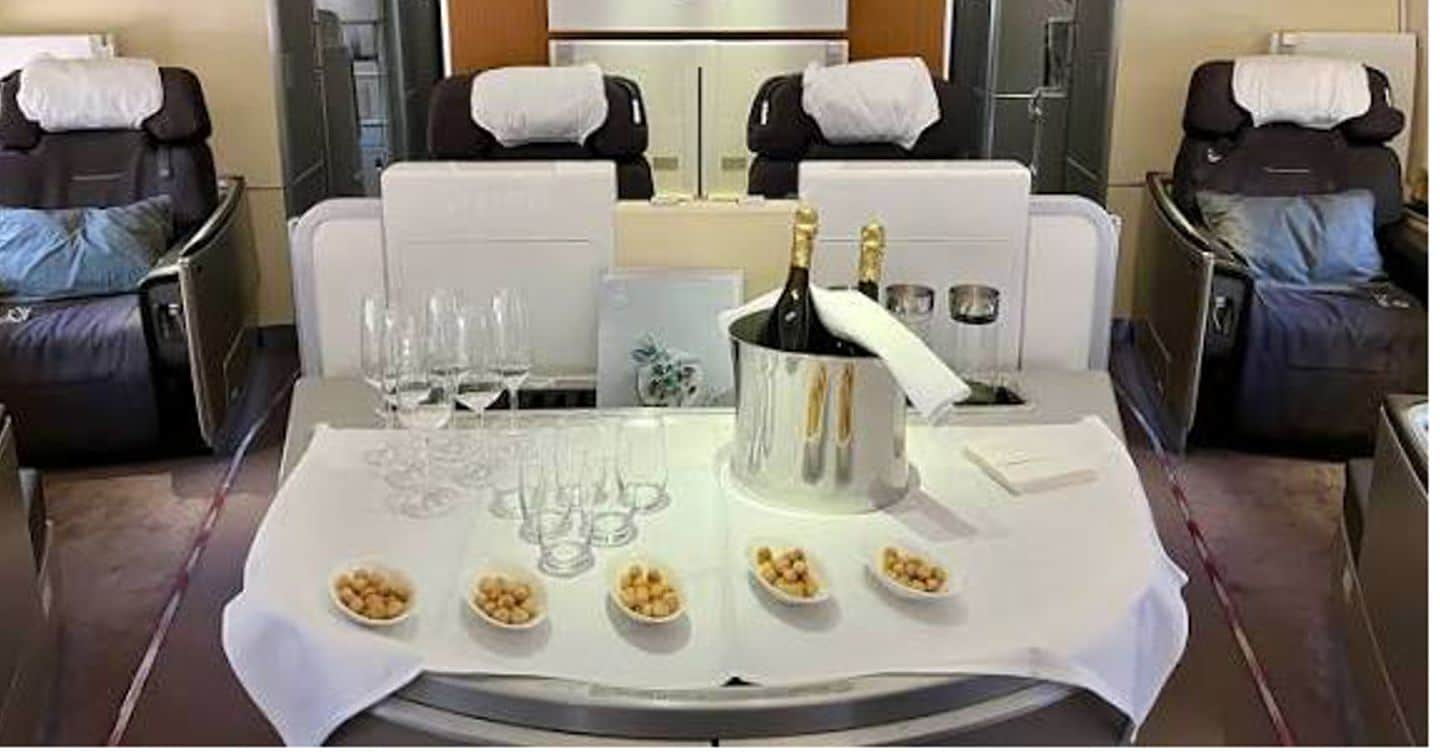
Companies are seeking ways to offset rising costs through more sophisticated revenue management and greater ability to monetize premium positions. It's not just about selling bigger seats or exclusive services; it's about understanding how to generate more revenue with less expense. One of the most significant cases is that of Air France-KLM, which invested $1 billion to renovate its high-end classes after the pandemic: with its modernization plan, the airline will transform at least 20 aircraft with new first-class cabins by the end of 2026.
This strategy aims to improve the average revenue per available seat mile by compensating for the cost increase resulting from exclusive service networks. Even European Airlines has followed this trend, increasing the number of premium cabin seats on all their international routes. The shift towards high-value travel market is not just a change in commercial strategy but also reflects changes in the traveler's mindset. Modern tourists are more interested in finding comfortable and satisfying trips, not just lower prices. This leads to an increase in leisure clientele willing to spend significantly higher amounts traveling in better conditions. Additionally, technological advancements have contributed to this movement.
The aviation companies are using smart devices to improve the quality of travel, such as security monitors or baggage control systems. These tools allow for high-quality service without significantly increasing expenses. However, the success of these trends is not uniformly achieved. Some airlines, like Air France-KLM, have been able to achieve significant benefits due to their ability to manage revenue and monetize premium seats. Others, like Europe Airlines, needed substantial investments to keep their businesses optimal. CONCLUSIONS: The movement towards the high-end travel market is a growing phenomenon that is radically changing the strategies of European airlines.
This movement requires complex revenue management and continuous technological innovation to ensure high-quality service at reasonable prices. Despite some obstacles, this trend appears to be an indicator of prosperity for European airlines in the future.
The news that matters, every morning.
Ricevi una selezione ragionata di business, mercati e innovazione.