Search Updated 18:35
CurrenciesEUR/USD 1,1402(-0,11%) CryptoBitcoin 66.448(+1,83%) CommoditiesOro 4.084(+1,88%) IndicesS&P 500 ETF 748,43(+0,85%)
BMag section

Innovation

Analisi, notizie e prospettive per capire ciò che conta.

13 articles
EIB authorizes €9.2 billion for European energy independence and competitiveness
Featured

EIB authorizes €9.2 billion for European energy independence and competitiveness

The European Investment Bank has approved a €9.2 billion package to boost European competitiveness, accelerate energy transition, and strengthen global strategic relations.

Leggi l’analisi


All updates

Intel seeking $15 billion to build its own contract fab
Innovazione

Intel seeking $15 billion to build its own contract fab

Intel is seeking to finance its own contract fab with a stock offering. Intel announced it is seeking to raise $15 billion through the sale of stock, a move to finance the construction of its own contract fab. The company said this operation is necessary to support the high costs required for the construction of new production facilities.

UK Seasonal Work Market Rebounds Thanks to Events and Weather
Innovazione

UK Seasonal Work Market Rebounds Thanks to Events and Weather

Data from the Recruitment and Employment Confederation indicate a return of seasonal jobs in the UK. The sector's seasonal market is recovering after months of uncertainty. The exceptionally hot weather and sports and cultural event calendars have stimulated demand for workers. The tourism and healthcare sectors have recorded a significant increase compared to the summer of 2025, with a 7.7% rise over the previous year.

Uber pays $966 million for driver suspension automation
Innovazione

Uber pays $966 million for driver suspension automation

A ride-hailing company received a record fine of $966 million for automatically disabling driver profiles without adequate information. The Dutch Court of Auditors applied GDPR to a ride-hailing company, highlighting a precedent for major tech companies. This decision by the Dutch Data Protection Authority represents the heaviest case under the European GDPR. Uber, based in the United States, was condemned for implementing automated systems that disable driver profiles without adequately informing them. This violation concerns privacy and the respect for fundamental rights of workers in the on-demand transport sector. According to the decision of August 17, the fine amount is 825 million euros, converted to 966 million dollars, according to the Dutch authority. This figure significantly exceeds previous fines imposed on Meta, which paid $1.2 billion for transferring European data without authorization. The company stated that Uber has also filed a lawsuit against the decision, arguing that the measure is proportionate and that driver rights are treated seriously. The company's response is based on policies that include human reviews and opportunities for drivers to contest suspensions, opposing indiscriminate automation. The Dutch Court of Auditors confirmed that Uber committed serious breaches, citing the lack of warnings and the absence of human intervention in suspension decisions. The delegation of Monique Verdier emphasized that a computer should not make autonomous decisions with such important consequences, such as immediate loss of income for the driver. The European regulatory context has evolved towards greater attention to competition and digital privacy, with the goal of avoiding anti-competitive practices and protecting consumers. The end of Google, $890 million, and Meta, $1.2 billion, show how regulatory authorities are applying strict standards to all major global technology platforms. European authorities have imposed billion-dollar fines in response to systematic violations, such as those of Google and Meta, which received reduced or revoked fines after lengthy litigation. Donald Trump has criticized these sanctions, while technology companies must now comply with stricter regulatory frameworks to avoid future legal actions. Expected developments include increased transparency in driver suspension processes and greater integration of human reviews in automated systems. Ride-hailing companies will need to verify whether their algorithms respect worker rights and clearly communicate decisions made. Corporate governance will be further tested to ensure that technology does not compromise safety and employee rights.

EU Commission Launches New Strategic Push for Maritime Value Chain Alliance
Innovazione

EU Commission Launches New Strategic Push for Maritime Value Chain Alliance

The European Commission has officially launched the Maritime Value Chain Alliance (EMA) to consolidate European industrial sovereignty. This event marks a shift from a simple support model to a structured cooperation model involving key actors such as maritime producers, ship owners, and end users. The primary goal is to strengthen European production capacity in strategic sectors, thereby ensuring greater strategic autonomy in a more competitive global context.

Eni and major oil companies seek new Venezuelan agreements
Innovazione

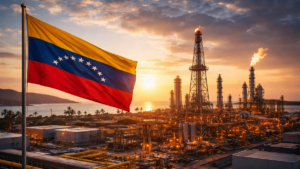
Eni and major oil companies seek new Venezuelan agreements

Venezuelan energy investment agreements could be signed this week according to Reuters data. The country is attracting major oil companies after months of talks with the Caracas government and state company Pdvsa. Eni, Chevron, Ge Vernova, the Indian ONGC, and the Colombian GeoPark are close to signing new energy sector investment deals. First agreements could arrive this week according to Reuters, citing four sources aware of negotiations. This new deal differs from the recent US-Venezuela oil agreement that guarantees Washington participation in 17 reserves totaling about 64 billion barrels. According to Reuters estimates, the project aims to bring Venezuela's production back to around 1.5 million barrels per day in the long term. The renewed interest from majors fits into Caracas' oil sector reform to make the market more open to foreign investors and bring capital and technology to an industry marked by years of poor investment and deteriorating infrastructure. At the center of the new oil rush is the Orinoco Belt, an area of about 55,000 square kilometers that holds enormous amounts of extra-heavy crude. This crude is more complex and costly to extract and work, but the size of reserves makes Venezuela one of the most important markets for the future of the oil industry. According to Reuters, part of the agreements includes transferring existing contracts under the new oil laws within six months. The new framework should offer more flexibility to foreign companies in managing reserves, exporting crude, and collecting sales proceeds. For Chevron, the pending deal should be significant and could include expanding activities in the Orinoco Belt and acquiring assets in the north of Monagas, a strategic area for light crude availability. GeoPark, instead, is pursuing access to the Bare reserve, which could make available up to a billion barrels of reserves. Eni points to Venezuela: Junin-5 and Corocoro. For Eni, the possible new agreement strengthens a presence in Venezuela that has lasted almost thirty years. In recent years, the Italian group concentrated its activities mainly on gas destined for the local market. The reopening of the sector to foreign investments and new licenses granted by US authorities have, however, changed the scenario. In April, Eni signed with the Venezuelan Ministry of Hydrocarbons and Pdvsa a preliminary agreement. The signing could happen by the end of the week according to Reuters data. The goal is to bring Venezuela's production back to around 1.5 million barrels per day in the long term. Negotiations are in advanced stages and sources indicate that agreements could be signed this week. It remains to be clarified if the acquisition of specific assets for Chevron and GeoPark will actually materialize as planned.