
Featured
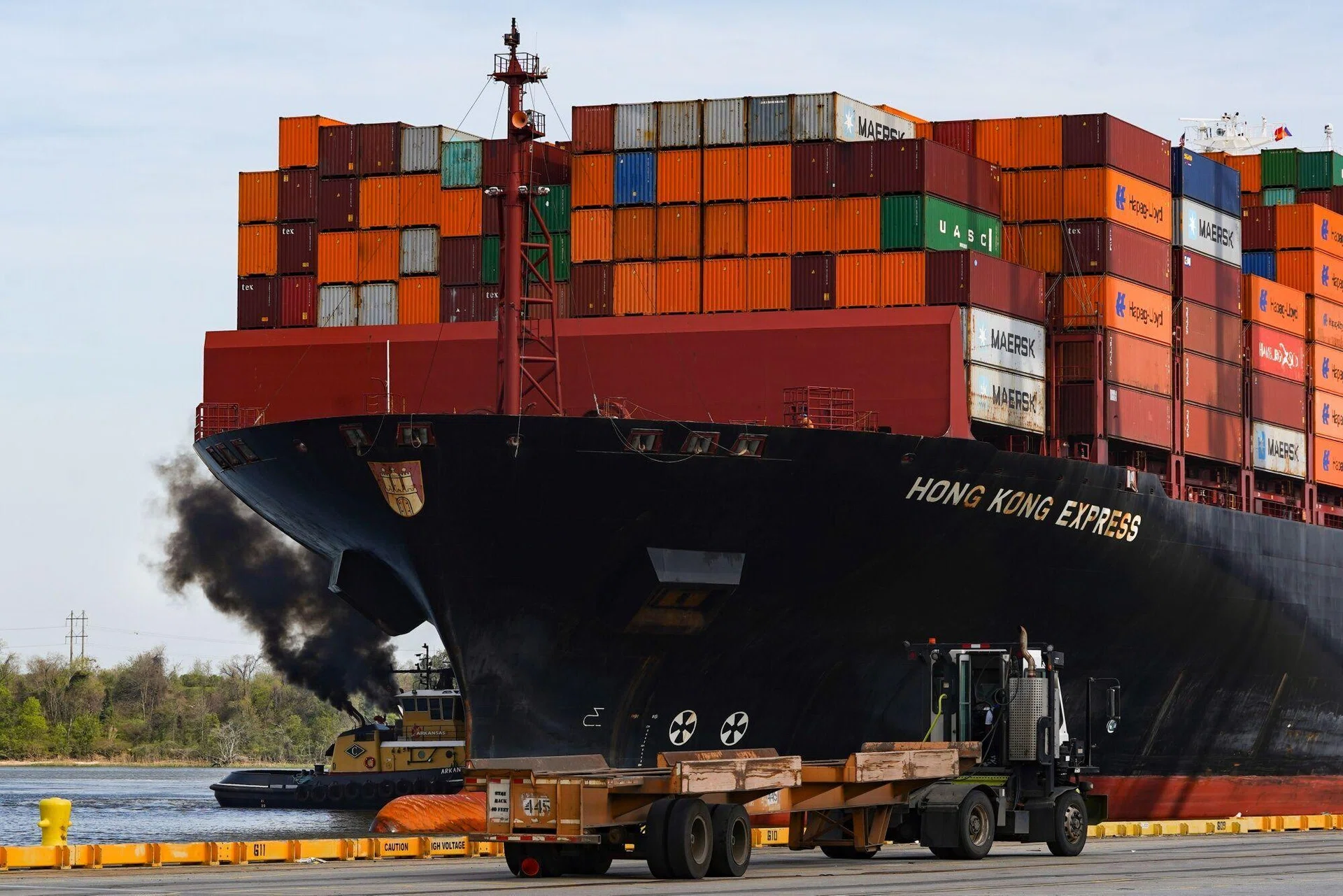
Hong Kong: Historic Deficit, Export Decline
Hong Kong has reached its narrowest trade deficit in over a year, with exports down 51% compared to the previous year.
Leggi l’analisiAnalisi, notizie e prospettive per capire ciò che conta.
Hong Kong has reached its narrowest trade deficit in over a year, with exports down 51% compared to the previous year.
Leggi l’analisi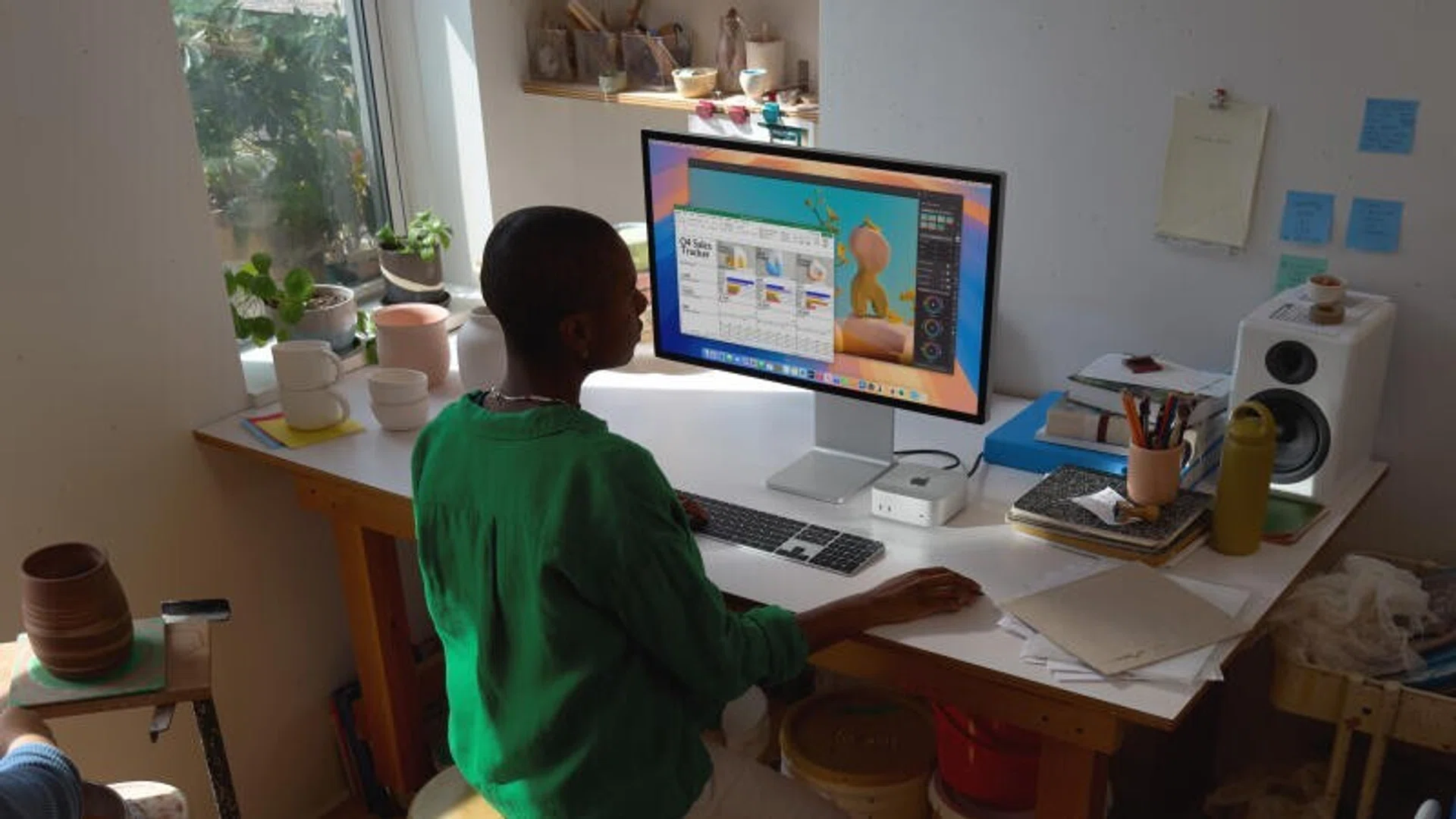
Apple has announced the arrival of Mac mini and Mac Studio powered by M6 chips, but demand is slowed by a chip shortage crisis.

Microsoft is facing a serious infrastructure problem that could block its growth plans in the artificial intelligence sector.

The tourism sector of Aotearoa is facing structural changes requiring an urgent review of its roadmap. The CEO, Rebecca Ingram, officially announced a new tourism strategy aiming for economic growth and environmental sustainability by 2050. This decision marks a turning point after the sector had to react to a complex and rapidly evolving set of factors.

A company that has invested heavily in its stores has still made a profit, raising doubts about the sustainability of the business model.

Claudia Sagliano's case highlights the complex interplay between tax residency, employment, and public healthcare services in a cross-border context.
The semiconductor industry is undergoing an irreversible paradigm shift, where software design is no longer optional but a fundamental requirement for producing advanced chips.

The Italian government is facing a coordination crisis that could block energy reforms and inflation. Eni receives 130 million to cover the fuel tax cut, while the government debates how to finance the measures. The situation is critical: the government has requested 130 million in advance payments on dividends to Eni and other major energy groups to cover the extension of the fuel tax cut. This request stems from the need to finance the new extension of the 17 centimes per liter gasoline discount, which extends until September 5. Without this financial coverage, the fuel tax cut could be limited as it was last time, to diesel, leaving transport costs without coverage. The political conflict is heated: the Minister of Economy Giancarlo Giorgetti and Prime Minister Giorgia Meloni support a price stabilization line, while the Minister of Industry Adolfo Urso and Environment Gilberto Pichetto Fratin prefer to concentrate interventions on lower incomes. This divergence is fundamental because it determines whether the cut will be generalized or if targeted measures will be adopted for those who need them most. The choice of measures is crucial for economic stability: the prevailing line proposes a general cut in taxes, supported by the belief that a generalized measure could help control inflation, given that transport costs weigh heavily on the price index. In contrast, the alternative line proposes targeted measures, but this approach is considered regressive because it favors the well-off who consume more fuel. The financial issue is complex: Eni must receive 130 million in advance, but the government must find the money to finance this 'tense hand'. The difficulty in approving funds for the extension of the gasoline cut from August 25-26 has already shown the fragility of the mechanism, making the request for advance payments for September 5 urgent. The picture is further complicated by a clash with the European Commission: the Italian request for a European tax on the profits of oil companies creates an interest conflict. The government must balance the need to cover the costs of the cut with European diplomatic pressure, avoiding tensions that could block energy transition. The chronology shows a series of difficulties: the government had to extend the gasoline cut for ten days, finding only 20 million necessary, and then yesterday to cover the new extension with 130 million from Eni. This process of negotiation was slow and required successive extensions, highlighting the slowness of decision-making processes in a fragmented political system. The expected results are uncertain: if the government succeeds in finding the 130 million, the fuel tax cut could be extended to fuels, reducing inflation. However, if the internal conflict is not resolved, the cut will remain limited to diesel, leaving transport costs without coverage and increasing pressure on final prices. The uncertainty on the Fubini model risks blocking the energy reform for months.

Italian tax law introduced a communication obligation for 2022 income, with immediate consequences for those who failed to provide the data.

Sony and Warner Music have filed a lawsuit against Anthropic for "theft of intellectual property," accusing the founders of having trained their models by violating the copyright.

Anthropic's IPO represents one of the largest ever recorded, but the launch will be hindered by strong public sentiment against new AI infrastructure. The company prepares to debut on the stock market while public opposition grows, as Americans show growing concern over data centers and fear AI replacing human work. This sentiment has become a critical risk factor for the prospectus, according to insiders who requested anonymity. Krishna Rao, Anthropic's CFO, faced challenges during preliminary meetings with banks and investors in San Francisco, where he had to address competition, margin pressure from open-source models, and the consequences of slowed data center construction. The company stated these discussions were confidential and details came from unidentified sources. In June, Anthropic presented an unmistakable debut offering, expected to be among the largest ever recorded. Elon Musk's SpaceX, competing through its AI division, raised $85.7 billion two months ago, including underwriters, representing the largest offering ever. Investors project Anthropic could surpass this record, projecting a valuation of around $2 trillion. As rival OpenAI pushes infrastructure partners to build at unstoppable speed to meet demand for advanced models and new services, Tech hyperscalers are spending hundreds of billions this year on capital expenditures to fuel data center development and acquire necessary graphics cards to fill them. According to a May Gallup survey, seven out of ten Americans oppose data center construction in their area, with nearly half strongly opposed. With midterm elections less than three months away, politicians from both parties have pushed against data center development, reflecting the anger of their voters. The issue was a key point in the Republican gubernatorial primary in Florida, won by Rep. Byron Donalds, who proposed restrictions on data centers in his area. On the same day, Pennsylvania Governor Josh Shapiro signed an executive order imposing stringent standards on data center development in his area. Companies must specify risk factors as disclosure to investors and for legal protection in their prospectus. SpaceX declared in its risk factors list that "global macroeconomic conditions and adverse geopolitical conditions could negatively influence our business, financial condition, operating results, and future prospects." Computational capacity is directly correlated to wealth for AI labs like Anthropic, which is valued at nearly $1 trillion in the private market. A slowdown could impact the historical growth rate for a company that has just surpassed a revenue run rate of $65 billion annually.

Nscale is seeking to raise $3.5 billion before an initial public offering. The company Nscale, focused on AI processing, is negotiating with a group of investors to raise up to $3.5 billion in funding before an initial public offering. According to available information, the London-based company is trying to sell up to $1.5 billion in convertible bonds to a group of investors. According to sources, Nscale also aims to secure about $2 billion in funding from Nvidia, one of the main chip suppliers for AI. The initial public offering could generate another $3 billion, according to Bloomberg News. Daniel Loeb's Third Point is expected to lead the convertible investment, according to some people who have spoken. Goldman Sachs Group is working on fundraising, according to people who have spoken. Nscale is offering the convertible bonds at the price equivalent to the IPO price minus a double-digit percentage, according to some people. The discount percentage will be adjusted up to a valuation of $30 billion, above which the conversion price remains the same. The company is informing investors that the total value of its contracts is about $103 billion, according to some people. This follows its $45 billion agreement to provide computing power to Anthropic. According to people, Nscale's estimated could generate an annual revenue of about $18.1 billion, and an annual profit of about $13.6 billion. People have said that the estimates are for illustrative purposes and not for formal indications, according to people who have spoken. The deliberations are ongoing, and details such as the number of investors could change and there are no final decisions yet taken, according to people who have spoken. Representatives for Nscale and Goldman Sachs have refused to comment, while representatives for Nvidia and Third Point have not immediately responded to requests for comment. The goal is that companies can tap into public and private investors for billions of dollars to finance unprecedented AI infrastructure. Nscale is developing a large campus in Norway that will be used by Microsoft, in addition to a campus in West Virginia. Most of the Nscale chips currently active come from the Blackwell series of Nvidia, and the company has contracted for about 194,000 Vera Rubin GPUs from Nvidia. The Hugging Face deal of Nvidia worth $13 billion is constructive for neoclouds like Nebius, CoreWeave and Nscale, given their growing role in AI infrastructure.
Australia faces potential significant price increases for chicken meat due to production costs and concerns over H5N1 avian influenza risk, despite the virus not spreading to breeding farms.