

BMag Signal · In 30 seconds
Critical readWhat happened. Global climate conditions are in crisis, and Turkmenistan's action represents a crucial turning point for the energy transition.
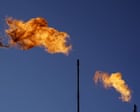
The most vulnerable country to greenhouse gases begins repairing its facilities. According to United Nations data, Turkmenistan has started closing methane flares from its energy plants. This intervention, defined as a 'turning point,' marks a fundamental step toward reducing greenhouse gas emissions, which account for 25% of the impact on current global warming.
Methane, also known as natural gas or fossil fuel, is a potent greenhouse gas that traps 80 times more heat than carbon dioxide. Its atmospheric degradation capacity is rapid, offering an immediate impact that some experts consider a brake on the climate emergency, unlike carbon dioxide which remains in the atmosphere for a long time. The situation has become even more critical following a recent Guardian analysis, which highlighted that the country has been identified as the most vulnerable to the release of greenhouse gases.
The government's response, described as a 'critical step,' involved international partners, marking a paradigm shift in the management of national energy resources. According to the information provided, Turkmenistan has stopped eight flares, repairing corroded pipes, faulty wells, and confusing flares. This work represents a 'first major success,' according to UN statements, but remains a complex task to complete successfully.
The emission history shows a significant disparity compared to other nations. While the UN's methane alert and response system sent 192 warnings to the country, only 20% of the information was managed on the ground. In contrast, the United States received 138 warnings but did not fix any flares in the considered period.
The data confirms that methane is a 'super emitter,' releasing tons per hour from a single valve or pipe, with a thermal impact exceeding that of a million cars or a coal plant. The repair of these flares not only reduces local impact but also directly contributes to mitigating the global greenhouse effect. Turkmenistan's governance is evolving in response to these new pressures, with an approach that includes collaboration with foreign partners to manage emergencies.
Although the action is a 'first major success,' the Turkmen society must face future challenges to achieve the emission reduction goals set by the United Nations.
The news that matters, every morning.
Ricevi una selezione ragionata di business, mercati e innovazione.
