

BMag Signal · In 30 seconds
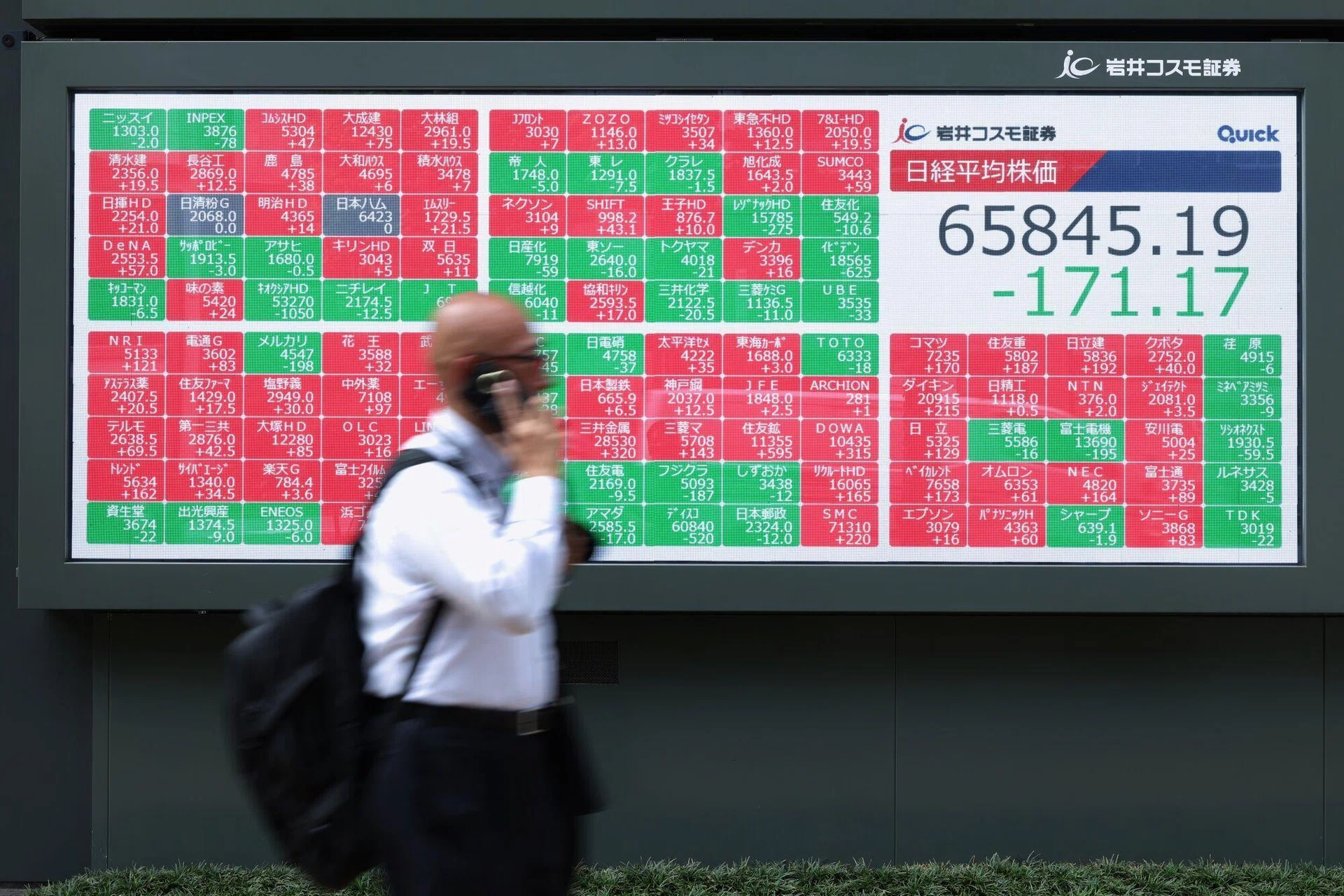
Critical readWhat happened. The Nikkei index closed for the fourth consecutive day at its monthly low, marking a 0.17 percent decline.
The Japanese index settled at 64,214.48 after a session of uncertainty regarding interest rates and the exchange rate, which prompted investors to avoid risk. According to Naoto Takahashi, an analyst at Aizawa Securities, market attention is focused on these two sectors, with uncertainty driving sales of risk assets. During the Thursday session, the Topix index registered a slight gain of 0.5 percent, reaching 4,102.04 points.
However, most attention remains concentrated on expectations regarding interest rates and the exchange rate, creating an atmosphere of uncertainty that prevents upward movement in risk markets. The company stated that uncertainty regarding Asian markets is a central theme for international investors. Among the heaviest declining stocks, the oil explorer Inpex fell 4 percent, while the industrial automation company Yokogawa Electric dropped 3.75 percent.
These two are the main drivers of the benchmark's decline, with the Nikkei index losing 0.17 percent in total. In parallel, the Topix index gained 0.5 percent, showing partial diversification among market sectors. Interest rate data shows an interesting divergence: US Treasury rates have fallen from historical multipliers, while Japanese bond rates at 30 years have crashed by 10 basis points.
This dynamic suggests that markets are reacting to a possible revision of interest rate expectations in a more "hawkish" context for the region. Market analysis indicates that volatility is the dominant factor determining investor choices. Energy and the mining sector suffered the worst decline among the 33 sub-indices of the Tokyo Stock Exchange, with the oil explorer Inpex losing 3.26 percent.
This represents the worst performance among all sub-indices, highlighting how the energy sector is losing ground to other areas. The company stated that uncertainty regarding interest rates has prompted investors to shift focus toward safer assets. The yen extended its gains, rising 1.24 percent against the dollar at 156.71, while domestic interest rate expectations have become stronger.
This has led to an appreciation of the exchange rate, which in turn has negatively affected risk stocks. Market analysis indicates that the strength of the yen is a key factor determining the global performance of the Nikkei index. Despite a positive trend in market breadth with 141 stocks in the green and 82 in red, the decline of some heavy stocks kept the index at low levels.
Market analysis indicates that volatility and uncertainty regarding interest rates remain the dominant factors influencing investor decisions. The company stated that the Asian market is experiencing a significant phase of transition toward new financial standards.
The news that matters, every morning.
Ricevi una selezione ragionata di business, mercati e innovazione.
