

BMag Signal · In 30 seconds
Critical readWhat happened. In the short period of its existence as a competitor in Italy's railway industry, Acciaierie d'Italia is facing a fierce battle with two major contenders, Jindal and Arvedi. The company has been trying to secure a safe territory in Taranto, where it was previously recognized before being forced to leave behind its cost and environmental issues.
The Flacks Group, which had previously refused to participate in the offer process, has confirmed that it will not join the battle. Instead, it intends to present its own offer only after having conversations with Premier Giorgia Meloni. This decision highlights the importance of maintaining open lines of communication between government officials and local communities during such high-risk negotiations.
Arvedi, despite coming out of the previous competition, has decided to return to the battle. This decision comes precisely when Italy is under pressure to face the absence of production in Taranto. Arvedi plans to bring back the production of iron products using electric furnaces instead of traditional methods abandoned due to cost and technological advancements.
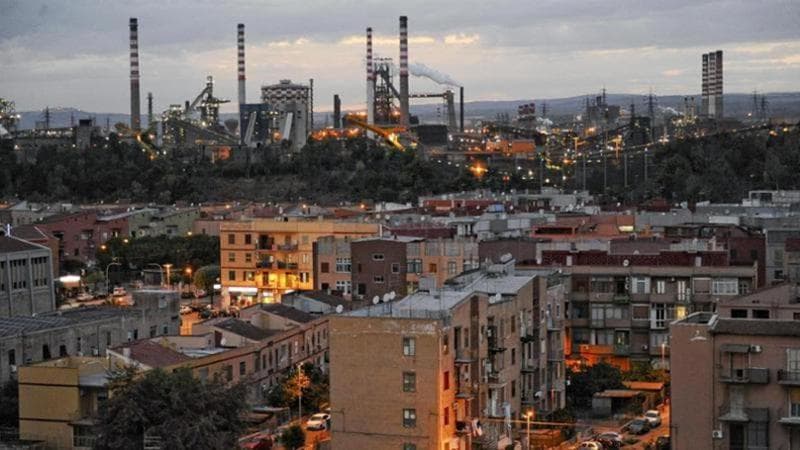
The contexts show the ongoing obstacles faced by the Italian steel industry, particularly in regions like Taranto, where the traces of past investments and technological innovations are still perceived today. As the companies prepare their presentations, they must navigate through complex political landscapes and interact with the same interested parties who are eager to see a revival of the region's prominence in the steel industry.
However, Jindal, known for aggressive expansion strategies, has also entered the market with a new perspective. His presence on the scene could potentially enhance the established order revolution, necessitating a revaluation of both companies' strategies and adapting to the changed market dynamics. The outcome of this competition will be listened to as the future orientation of Italy's railway industry and its ability to compete globally.
In the battle between these two major contenders, it reflects the general trends of Italian economy, where foreign direct investment (FDI) continues to play a significant role in promoting growth and innovation. However, while the companies seek to establish themselves in Taranto, they must also confront local resistance and doubts about foreign investment in the local industrial area.
Following this conflict, the Acciaierie d'Italia commissioner will have the responsibility to evaluate the offers presented, ensuring that all involved parties respect the rules set by the government. The results of this procedure not only determine the future of Acciaierie d'Italia but will also be precious suggestions on how Italy can improve its position in the global iron industry market.
As for the chaos that has occurred in this battle, it remains to be seen whether the future of steel production in Taranto will be defined by the strength of its industry or by the adaptability of its communities to the new economic reality. It will only be time to see if the region can overcome its past efforts and emerge stronger from this tumultuous phase.
The news that matters, every morning.
Ricevi una selezione ragionata di business, mercati e innovazione.
