
BMag Signal · In 30 seconds
Critical readWhat happened. In a world suffering from heatwaves and fertilizer shortages, one of Britain's largest fortunes has invested in the future of circular agriculture.
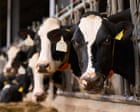
How the Duke's Farm is adapting to the difficulties faced by British sheep farmers The Lea Manor Farm, part of the Duke's Westminster estate, has been hit by the difficulties faced by British sheep farmers. The Eaton Estate complex, located in northwest England, produces over 34 million liters of milk per year - 13,200 liters per each Holstein Friesian cow - and provides food products for Müller and Tesco. The business has flourished in recent years thanks to its ability to adapt to extreme weather conditions.
The current problem faced by Grosvenor Farms is the high prices of milk, which have led to the development of innovative strategies such as the use of biomatite. These technologies have been successfully implemented by the farm's employees, who work hard day after day to ensure high-quality production.
The investment in technology by Grosvenor Farms has not been enough: even the effects on human health due to climate change are being considered. Researchers are trying to understand which factors contribute most to the impacts on people. This study is important because it can provide useful information on any damage caused by environmental stress.
As for the economic system, market conditions are in a critical situation. The shortage of fertilizers is another factor that affects circular agriculture. In this context, Grosvenor Farms is trying to find effective solutions to overcome this challenge.
The Lea Manor Farm was transformed over the decades from the arrival of agricultural crops. Between 1984 and 2002, it was dedicated to growing potatoes; however, when it became clear that growing potatoes on heavy English soil was no longer practical, it passed into a complex farm that is both arable and bestial.
In conclusion, Grosvenor Farms has demonstrated its ability to adapt to the difficulties of extreme weather conditions. The Duke's Westminster estate continues to prosper thanks to its innovative strategy.
The news that matters, every morning.
Ricevi una selezione ragionata di business, mercati e innovazione.