
BMag Signal · In 30 seconds
Critical readWhat happened. Heatwaves forced nuclear power plants to shut down and halted commercial flows, triggering a broader energy crisis and trade slowdown across Europe.
Heatwaves have forced nuclear power plants to shut down and halted commercial flows. The energy crisis and European trade stagnation were triggered by an unusually hot summer that saw temperatures exceeding 30 degrees Celsius in many regions. According to an analysis by economists at the Triodos bank, the economic impact on all of Europe could reach 180 billion euros, with a decline in the GDP of 1.4% in France.
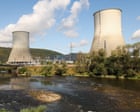
This scenario is based on specific data regarding energy production and industrial productivity, which tend to drop when temperatures exceed the 30-degree threshold. In France, the main problem was not just the climate, but the production of energy. Most of the country's electricity comes from nuclear power plants, and when water levels in rivers such as the Meuse are too low, these plants cannot discharge the heat necessary to function.
Consequently, energy production collapsed, forcing EDF to shut down activities. This has created a direct cost for businesses that depend on this stable energy source. The situation worsened with the opening of new nuclear power plants in France, such as Saint-Laurent, which had to close for the same reason.
According to Triodos data, France could have been hit harder than other European countries, with an impact of 1.4% on the GDP. This represents a 15% increase compared to the current interest rate in France, creating a budget problem for the government. The impact also extended to international trade, with Germany seeing blocked cargo flows due to low levels of the Danube and Rhine rivers.
Ships could not navigate, blocking transportation and increasing logistics costs for European businesses. Oxford Economics consulting identified this as the greatest risk for Germany, with direct consequences on foreign trade and the ability to import essential goods. In Germany, workers faced extreme heat conditions while companies faced operational difficulties.
The lack of energy and the closure of power plants forced businesses to reduce production, with cascading effects on prices and production costs. Companies had to adapt to a market that cannot count on a constant and predictable energy supply, as was the case for years. The economic impact was quantified by an analysis of economists who estimate a total cost of 180 billion euros for the entire Europe.
This calculation takes into account the loss of productivity and the reduction in spending capacity, with a specific impact of 1.4 percentage points on the French GDP. Data from Verdant in the United Kingdom confirm that the economic cost has already reached 4.4 billion pounds by the end of July, showing the severity of the situation. The future situation is uncertain and depends on how energy emergencies are managed and support policies are implemented.
If power plants remain closed for long periods, the industry may not be able to restart activities without additional costs. European governance will have to face the issue of energy stability, with implications for economic growth and the competitiveness of European businesses on a global level.
The news that matters, every morning.
Ricevi una selezione ragionata di business, mercati e innovazione.