
BMag Signal · In 30 seconds
Critical readWhat happened. A Hong Kong-based mediation organization has resolved another international dispute, involving parties from Singapore and mainland China, while the number of signatory states has increased to ... The organization has also seen a rise in the number of contracting parties, reaching a total of 16. Teresa Cheng Yeuk-wah, secretary general of the International Mediation Organization (IOMed), attributed the success to her team's 'certain attitude' towards geopolitical factors.
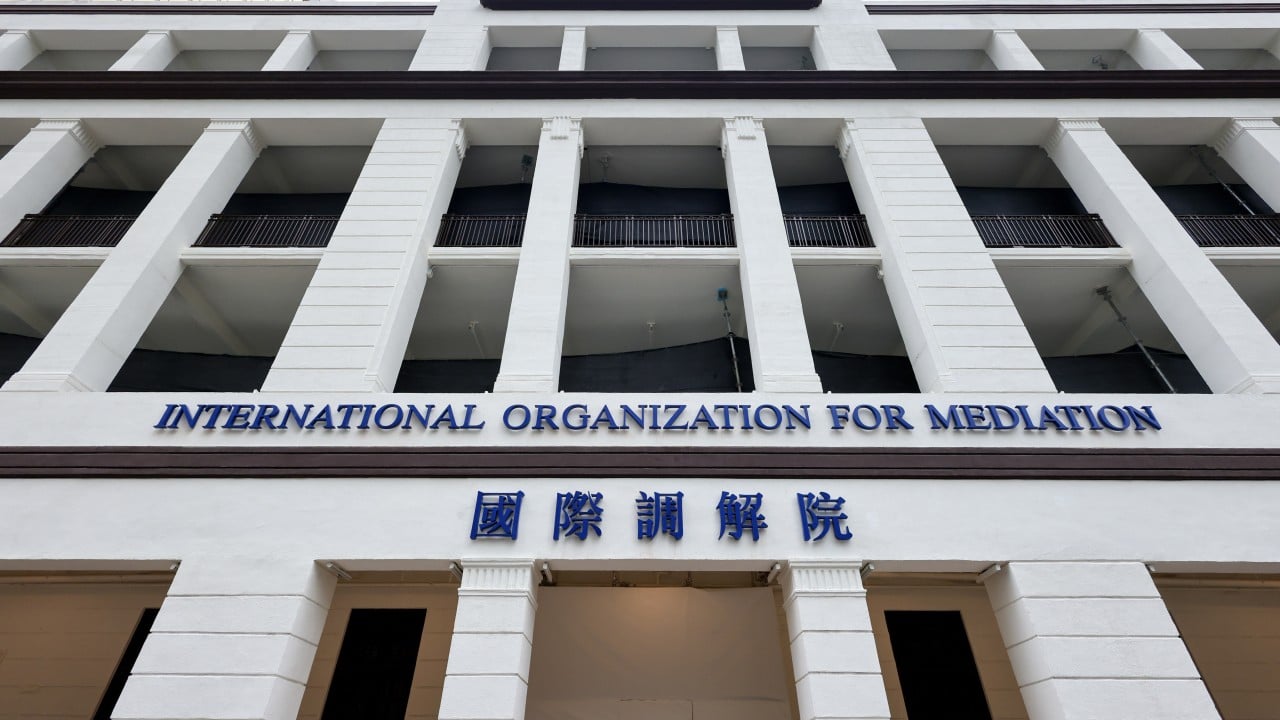
A Hong Kong-based mediation organization has resolved another international dispute involving parties from Singapore and mainland China, while the number of signatory states has increased to 46. The organization has also seen a rise in the number of contracting parties, reaching a total of 16. Teresa Cheng Yeuk-wah, secretary general of the International Mediation Organization (IOMed), attributed the success to her team's 'certain attitude' towards geopolitical factors...
According to IOMed, the case involving a maritime dispute has demonstrated the effectiveness of mediation. The organization plans to expand its operations in the coming months, with visits planned to several countries including Saudi Arabia, the United Arab Emirates, Algeria, Morocco, and Serbia. This will be followed by further expansion into Austria, France, and the United States.
IOMed's secretary general noted that the number of signatory states has increased from 37 to 46 since October, while the number of contracting parties has doubled, reaching a total of 16. Despite not being able to provide further details due to confidentiality concerns, Cheng stated that she believed the organization could gain international recognition through word-of-mouth. The case involving a maritime dispute has shown the effectiveness of mediation, according to IOMed.
In the coming months, companies will need to focus on several key areas: quality of revenue, retention of client portfolio, and sustainability of net margin. The signs pointing to increased competition and demand are clear, and in the short term, the decisive factor remains commercial execution: entry times, channels, and market selection could determine whether expansion or contraction occurs. According to IOMed's secretary general, when positions are set aside for geopolitical reasons, it is difficult to think of anyone who would argue that mediation is a negative concept...
Regardless of nationality or political position, people with whom the organization has been in contact have accepted mediation fully and without reservation. The International Mediation Organization (IOMed), guided by China - the world's first intergovernmental mediation organization dedicated to resolving international disputes through mediation - was officially inaugurated in Hong Kong last October, after countries signed the founding convention in May of the same year. Cheng noted that her team had already visited Saudi Arabia, the United Arab Emirates, Algeria, Morocco, and Serbia, and would soon be visiting Austria, France, and the United States to demonstrate IOMed's work.
The organization's secretary general stated that the number of signatory states has increased from 37 to 46 since October, while the number of contracting parties has doubled, reaching a total of 16. Despite not being able to provide further details due to confidentiality concerns, Cheng stated that she believed the organization could gain international recognition through word-of-mouth. The case involving a maritime dispute has shown the effectiveness of mediation, according to IOMed.
In the coming months, companies will need to focus on several key areas: quality of revenue, retention of client portfolio, and sustainability of net margin. The signs pointing to increased competition and demand are clear, and in the short term, the decisive factor remains commercial execution: entry times, channels, and market selection could determine whether expansion or contraction occurs.
The news that matters, every morning.
Ricevi una selezione ragionata di business, mercati e innovazione.