
BMag Signal · In 30 seconds
Critical readWhat happened. Tutor interactive tools, monitoring devices, and family assistants promise efficiency while growing concerns that artificial relationships may replace human ones.
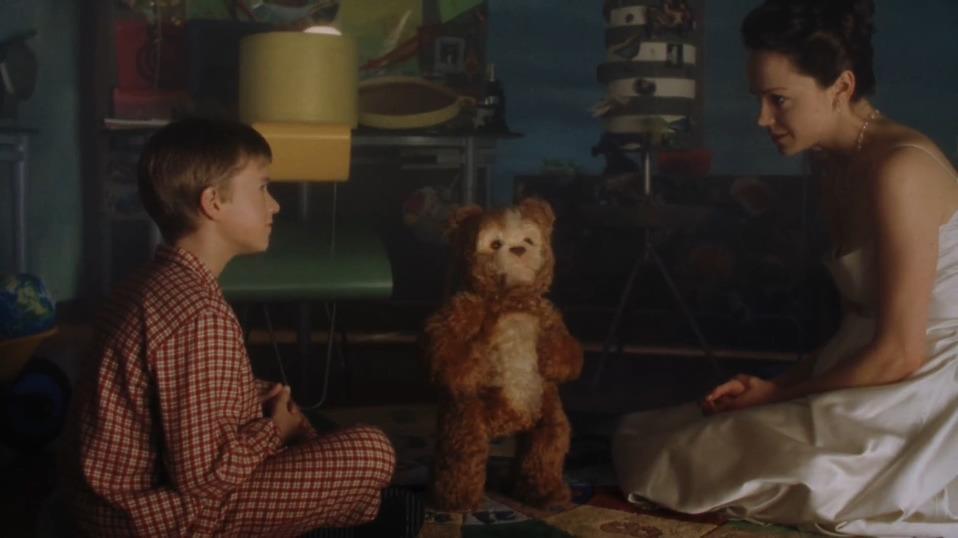
Interactive tutors, monitoring devices, and family assistants are promising products that don't just respond to questions but also take on a reassuring toy or robot form capable of conversing and interacting. The critical point isn't just about the quality of generated responses; it's about the role these devices could play in daily life and child growth. An image from the article features Teddy, an animatronic bear from the film 'A.
I. Artificial Intelligence', directed by Steven Spielberg and released in 2001. In the cinematic narrative, Teddy walks, talks, makes decisions, and reacts to people's needs and emotions.
It is both companion and protector. NPR observes that androids fully credible like humans remain elusive, while some characteristics attributed to this imaginary toy appear more plausible today. A technological trajectory presented here presents potential operational benefits for adults.
AI can become a tool to increase productivity of parents and reduce time needed for certain activities. This perspective values not only entertainment for children but also the system's ability to assist families and simplify tasks related to everyday life. Another area involves monitoring.
According to NPR, systems based on AI might provide useful data to parents and researchers regarding infant development. Observing interactions over time would transform the toy into a collection and analysis tool as well as an interlocutor. However, the source does not indicate quantitative metrics, experimental results, or criteria to evaluate information credibility.
There is then educational function. An interactive toy capable of dialogue may operate as an interactive tutor and help some children learn. This promise is significant because it combines usage continuity, response capability, and interaction adaptation.
NPR presents this application as possible, not proven already: there are no reported efficacy rates, comparisons with human teachers, or longitudinal data on eventual progress. The risk highlighted by child development specialist Dana Suskind centers around substitution. Concern lies in whether artificial intelligence will replace human-human relationships from which children's brains have evolved to learn.
In terms of balance between opportunities and risks, the problem emerges when efficiency offered by devices doesn't integrate relationship with parents and other people; instead, it starts reducing their frequency and centrality. Suskind initially chose 'The Trojan Teddy Bear' as title for her book. A metaphor that captures caution: a companion artificial can appear tender, familiar, and harmless but introduces unseen dangers.
Toy form counts because makes technology more easily accepted within homes and closer to children than chatbots used through screens. Proposed valuation isn't rejection of AI. Same expert according to NPR recognizes promising applications in assisting parents, research, monitoring, and education.
Tension arises from combining benefits and costs potential: greater efficiency for adults and personalized support for children, one side; possible diminishment of formative relations, another. Source does not provide metrics or criteria to establish when integration becomes substitution. Remaining questions open up for understanding impact of these products.
Material published by NPR does not offer market data, growth predictions, prices, family distribution, or longitudinal results on children. It also does not specify forms of usage exposed to risk indicated. Development awaited will be measured not only by technical capability to build credible companions but evidence emerging on its relation to learning and interactions with humans.
The news that matters, every morning.
Ricevi una selezione ragionata di business, mercati e innovazione.