
BMag Signal · In 30 seconds
Critical readWhat happened. The nuclear deal between the Trump administration and Saudi Arabia has reversed a long-held US policy on a key Middle Eastern ally.
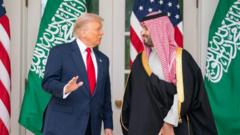
Previous US presidents insisted that Saudi Arabia normalize relations with Israel in exchange for nuclear technology. The nuclear deal between the Trump administration and Saudi Arabia has reversed a long-held US policy on a key Middle Eastern ally. According to reports, President Donald Trump has conceded to Saudi Arabia what it wanted without obtaining concessions from Israel, despite objections from critics who say this could trigger a nuclear arms race in the region.
On Wednesday, in a social media post, he said the nuclear deal was subordinate to the Kingdom of Saudi Arabia's adoption of the Abraham Accords, a series of agreements reached during his first term that have normalized relations between Israel and the Kingdom. The signs so far indicate competitive pressure and demand. For businesses, it's not just about growth in volume: it's also about quality of revenue, client retention, and net margin sustainability in the next quarter.
In the short-term, the decisive lever remains execution: entry times, channels, and market selection could determine whether expansion or compression occurs to margins. It wasn't immediately clear if this condition was included in the agreement text that hasn't been made public, nor if Saudi Arabia had accepted it or would be forced to adopt the Accords. The deal seems to be the last example of Trump's abandonment of traditional US policy on the Middle East, centered on Israel and a two-state solution for the Israeli-Palestinian conflict.
In his second term, Trump has focused mainly on strengthening American economic influence to compete with China and other rivals. According to analysts, the nuclear deal with Saudi Arabia has signaled that the US intends to maintain its regional allies in its orbit, even if this could irritate Israel. "The Middle Eastern countries want to develop their own nuclear infrastructure and will do so without US involvement," said Yusuf Can, a Middle East expert at Amena Strategies. "Washington is taking note of it." With this agreement, the US has effectively told Saudi Arabia not to work with China. The US has signed an historic nuclear deal with Saudi Arabia.
The petrochemical industry makes sharp turns after Houthi threat to navigation. For businesses, it's not just about growth in volume: it's also about quality of revenue, client retention, and net margin sustainability in the next quarter. In the short-term, the decisive lever remains execution: entry times, channels, and market selection could determine whether expansion or compression occurs to margins.
The news that matters, every morning.
Ricevi una selezione ragionata di business, mercati e innovazione.