
BMag Signal · In 30 seconds
Critical readWhat happened. Kalshi, a prediction market platform, has been facing increasing judicial challenges due to growing concerns about local gambling laws. Its losses are accumulating as judges refuse to block state gambling laws, leaving Kalshi to navigate through an increasingly complex regulatory environment.
In recent days, Kalshi, a prediction market platform, has had to confront rising legal challenges stemming from growing concerns about local gambling laws. It has faced increasing attention from the judiciary, with two appellate courts recently refusing Kalshi's attempts to block state gambling laws in Connecticut, New York, and Nevada. This new setback is followed by Kalshi continuing to face new litigation from the Arkansas state prosecutor, who has filed another lawsuit against Kalshi in a state court in Arkansas.
Kalshi ensures that its products are not considered games of chance, but the Arkansas Law is only concerned with the content, not the terminology. The Arkansas Attorney General, Tim Griffin, stated that Kalshi violated state law by offering games of chance to young people aged 18 or older and did not pay taxes or comply with other necessary regulations for legally authorized gaming operators in his state. His accusation was presented in a state court in Arkansas, following a week after the Arkansas Attorney General, Derek Brown, praised Kalshi and its founders for violating the gambling bank in Utah.
Translation Italian: Kalshi ensures that its products are not considered games of chance, but the Arkansas Law is only concerned with the content, not the terminology. The Arkansas Attorney General, Tim Griffin, stated that Kalshi violated state law by offering games of chance to young people aged 18 or older and did not pay taxes or comply with other necessary regulations for legally authorized gaming operators in his state. His accusation was presented in a state court in Arkansas, following a week after the Arkansas Attorney General, Derek Brown, had praised Kalshi and its founders for violating the gambling bank in Utah.
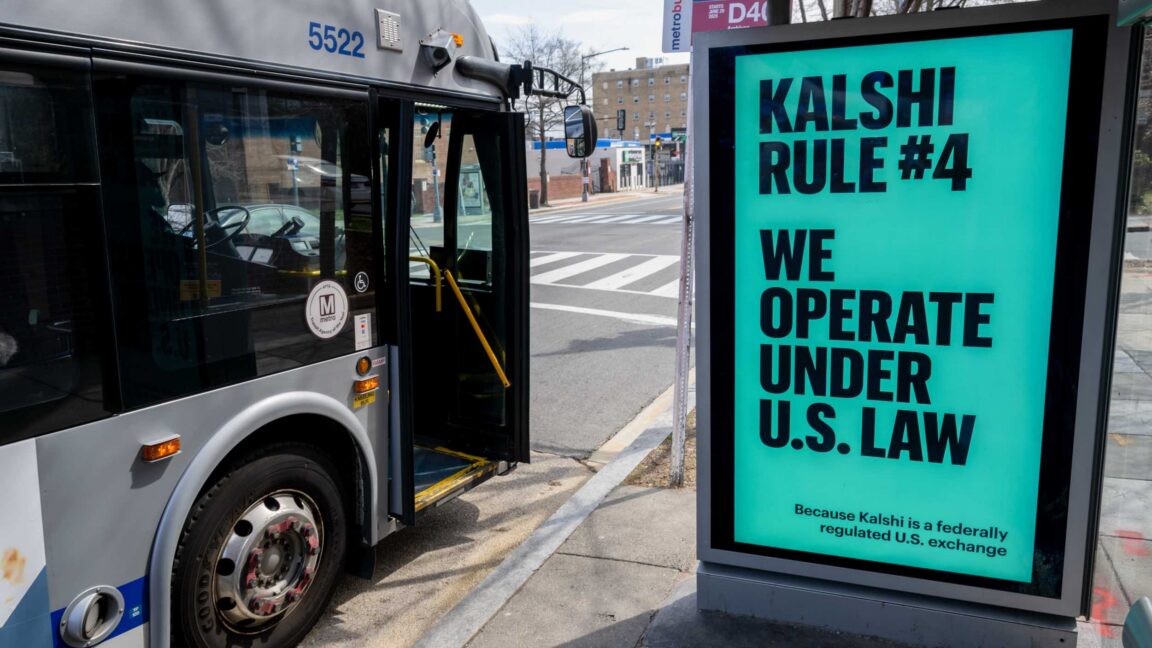
In a federal regulatory network for financial exchanges, Kalshi must refuse to comply with the various laws of each U. S. state. However, a federal judge in Utah previously declared that these states can apply their own laws against the counterfeiting machine.
In response, Kalshi has declared that it should not have to comply with the various laws of each U. S. state. The situation highlights the ongoing tension between judicial laws of government and federal laws concerning gambling laws.
While Kalshi proposes to remain compliant with federal laws, it is immediately subjected to further attention from state prosecutors, who seek to apply their own laws against gambling. This situation underscores the complex problems faced by companies operating in regions with diverse gambling laws. Kalshi's situation also serves as a warning for companies operating in areas with complex regulatory environments.
The problem of Kalshi not only reveals doubts about the future of prediction markets but also raises questions about the role of technology in regulating gambling. As states try to implement anti-gambling laws, companies like Kalshi may have to face increasing pressure to navigate through these complex regulatory landscapes while maintaining their primary business operations. In conclusion, Kalshi's judicial losses are piling up as concerns grow over local gambling laws.
As judges refuse to block state gambling laws, Kalshi finds itself facing greater judicial attention and potential penalties. This situation highlights the problems that companies operating in areas with diverse gambling laws must confront and the need to continue innovating and adapting as they navigate through these regulatory environments.
The news that matters, every morning.
Ricevi una selezione ragionata di business, mercati e innovazione.