
BMag Signal · In 30 seconds
Critical readWhat happened. The Italian tax system is divided into two groups: those who declare and those who do not. The IRPEF is a complex and intricate tax system with a series of rules and procedures that significantly influence the distribution of income and taxes. Those who declare more taxes pay less taxes compared to others, while those who do not declare pay much more. This phenomenon is due to rising welfare spending and changes in the pension system, which have led to a minority of contributors paying at least 35,000 euros annually. Another important aspect is the diversity of incomes among Italians. Elderly, civil servants, managers, and pensioners with medium-to-high incomes are the most active contributors to the IRPEF, while self-employed and low-income professionals are considered
The Italian population is divided into two camps: those who declare taxes and those who do not. The IRPEF (Italian Revenue Protection Fund) is a complex and intricate tax system with a series of rules and procedures that significantly influence the distribution of income and taxes. Those who declare more taxes pay less in taxes compared to those who do not declare, while those who do not declare pay much more. This phenomenon is due to the increasing spending on welfare and changes in the pension system, which have led to a minority of contributors paying at least 35,000 euros annually. Another important aspect is the diversity of incomes among Italians. Elderly, civil servants, managers, and pensioners with medium-to-high incomes are the most active contributors to the IRPEF, while self-employed and low-income professionals are considered
Moreover, there are many residents who do not declare any tax, making it difficult to manage fiscal revenues. The Observatorio di Itinerari Previdenziali report presented to the CNEL analyzes income declarations based on healthcare and social assistance costs.
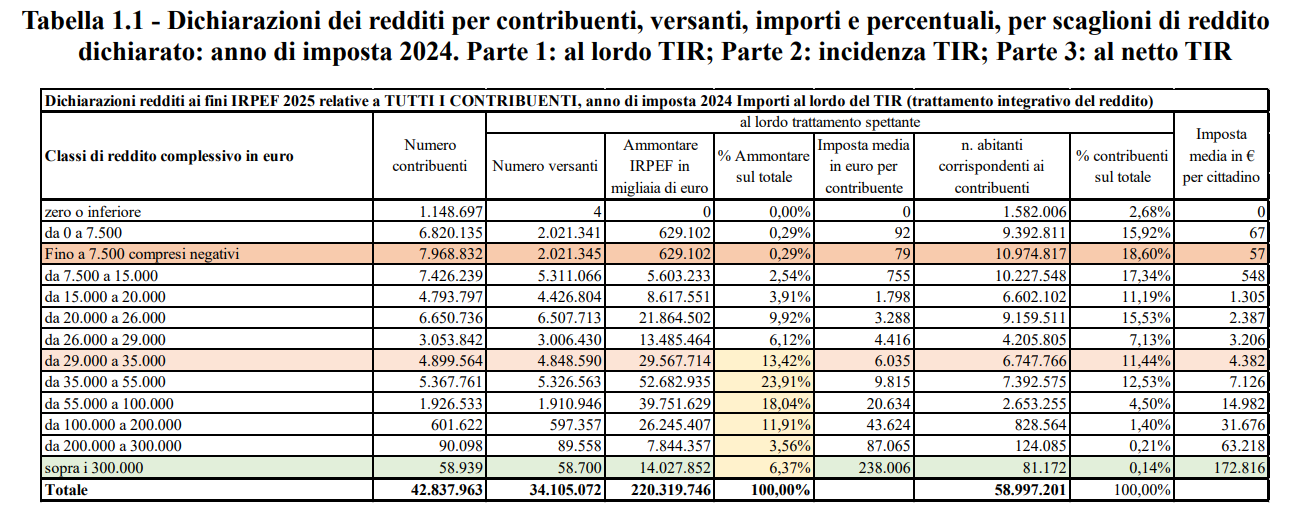
This phenomenon primarily occurs in lower-income brackets, where the average tax paid is below €300 annually up to €15,000 of income, exceeds €20,000 above €55,000 and reaches over €238,000 above €300,000. These conditions have necessitated a thorough review of the ISEE (Extended Tax Relief and Subsidies) and a single database for assistance, which should be implemented within the near future to ensure an equitable distribution of financial resources. However, it is important to note that this situation is not solely linked to the economic crisis. The Italian population is divided into two groups: those who declare and those who do not.
The elderly, civil servants, managers, and retirees with medium-high incomes are the most active contributors to the IRPEF, while self-employed individuals and professionals with low incomes are considered 'patients' and do not pay taxes. Additionally, there are many residents who do not declare any tax, making it difficult to manage fiscal revenues. The Italian tax system was designed to finance the country's fiscal revenues through taxation.
The news that matters, every morning.
Ricevi una selezione ragionata di business, mercati e innovazione.