
BMag Signal · In 30 seconds
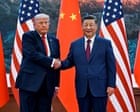
Critical readWhat happened. Recently, American President Donald Trump's visit to October Church has sparked a series of questions about how he might influence his meeting with Chinese Premier Xi Jinping, leaders of Beijing. Specifically, concerns are based on Trump’s “smoking” towards China’s leader but no significant results were expected for this summit between two major economic powers.
The tension between the United States and China is fueled by fear that artificial intelligence could lead to further conflicts. This clash of the two major industrial powers continues to dominate contemporary international politics. As China's economy grows rapidly while America struggles to maintain its grip on aid markets abroad.
This disparity could also drive the advancement of artificial intelligence (AI). Given that both countries have invested heavily in the technology sector.
An important event is when Jeff Bezos, CEO of Amazon, Sundar Pichai from Google, Sam Altman from Open AI, Tim Cook from Apple, Elon Musk from Tesla, Mark Zuckerberg from Meta and Jensen Huang from NVIDIA will be hosted for an official lunch at the White House in Washington DC where they will participate in a discussion to be held just days before formal negotiations between Secretary of Finance Scott Bessant of the United States and Vice Premier He Lifeng of the People's Republic of China on how future artificial intelligence impacts their respective economies.
The pressure is evident: President Donald Trump insists that we should lead the way in intellectual development and refuses to accept a request for slowing down this system that prints out China's potential within their economic and political sectors of America’s regions. Additionally, as part of this strategic conversation, one of the American representatives – Scott Bessant – proposes an approach to ensure security through “a safety mechanism” with Chinese leaders based on information from U. S. authorities.
This universe shows the possible role of artificial intelligence in shaping both nations' future developments, but also in controlling global trade and geopolitical relations between these two major economies.
The news that matters, every morning.
Ricevi una selezione ragionata di business, mercati e innovazione.