
BMag Signal · In 30 seconds
Critical readWhat happened. The Undersecretary of Defense for the United States, Jacob Helberg, has highlighted the US government's intention to maintain stable relations with European technology companies. Specifically, the government is seeking to ensure that companies based in associated countries are treated fairly and not discriminated against in the context of their origin countries.
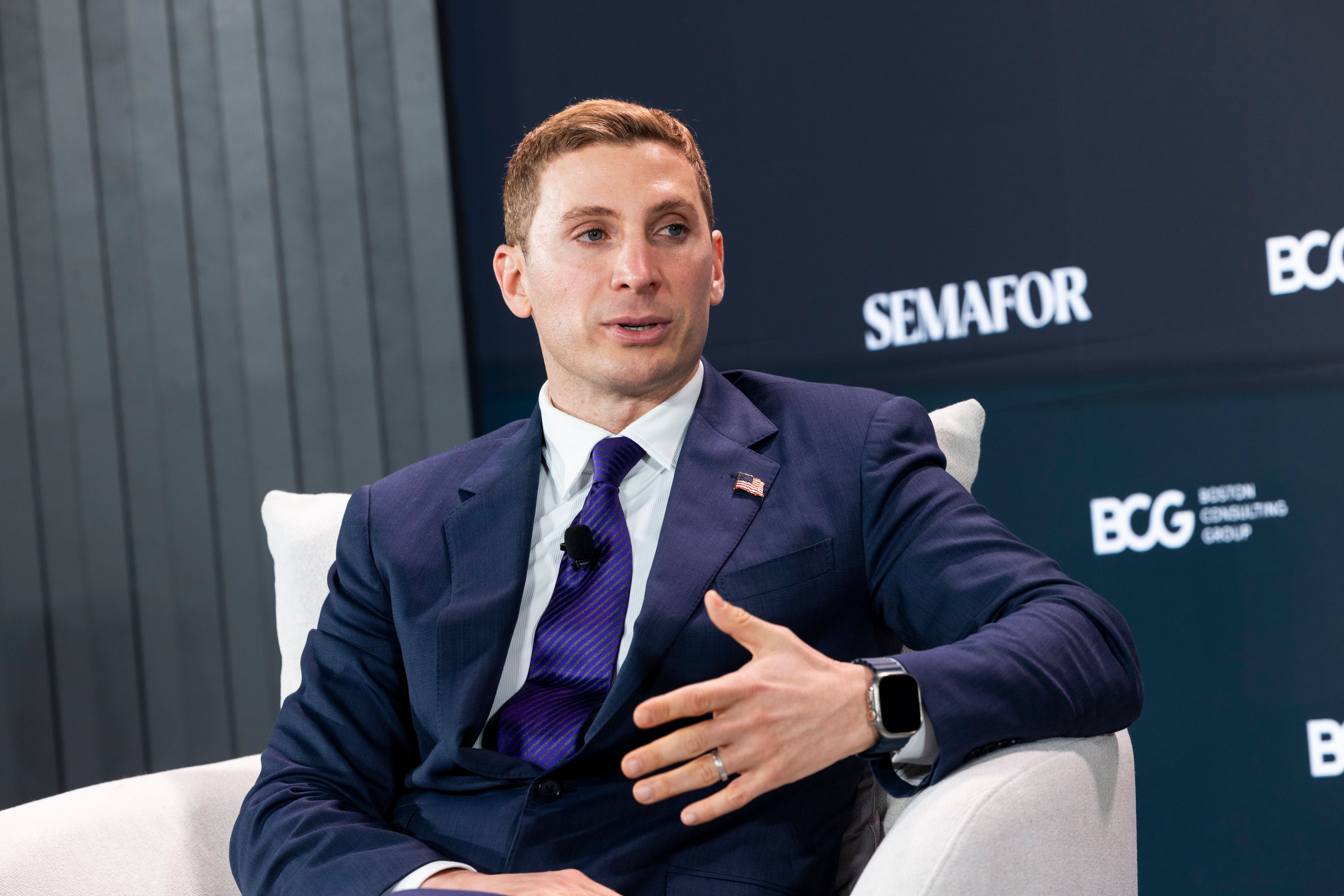
An agreement to protect local enterprises and promote innovation. Undersecretary of Defense for the United States, Jacob Helberg, made a statement at a Semafor international technology conference, where he said, 'There is nothing special' about the administration of Trump's concern for technology companies based in associated countries. 'It's not a specific action plan,' he added, 'but it's simpler to say there are no problems.' Helberg also emphasized that the US is working with ASML, Samsung, and SK Hynix, three of the major technology companies, to create a security initiative called Pax Silica. This initiative aimed to protect information systems and semiconductor technologies from external risks.
During this conference, Helberg also criticized some legislative proposals that could further limit AI chip exports, as proposed by two bipartisan departments. 'This should be considered a national security issue,' he said, 'because if you don't do it, you might have a security incident.' The president of ASML, Christophe Fouquet, then commented on the situation, referring to the US government's decision not to worry about companies based in associated countries. 'It's very important,' he said, 'because it means we can continue to grow and improve our product.' The president of Samsung, Sung Chang-Hee, said that maintaining a line with globalization and sharing technical knowledge is fundamental for their growth. 'If we don't do it, we wouldn't have any way to grow,' he added. Finally, the president of SK Hynix, Sung Chul-Han, highlighted that maintaining stable relations with local enterprises is crucial for their growth and ensuring their competitiveness on the global market. 'There are no problems if we are in line with globalization,' he said, 'because only then can we continue to grow and improve.' However, while representatives of technology companies showed enthusiasm for the US government's intention to maintain equal relations between local enterprises and those based in associated countries, some analysts have criticized the Trump administration's decision not to worry about companies based in associated countries. 'It's a difficult choice to make,' noted a recently published study, 'but it should be considered a national security strategy.'
The news that matters, every morning.
Ricevi una selezione ragionata di business, mercati e innovazione.