
BMag Signal · In 30 seconds
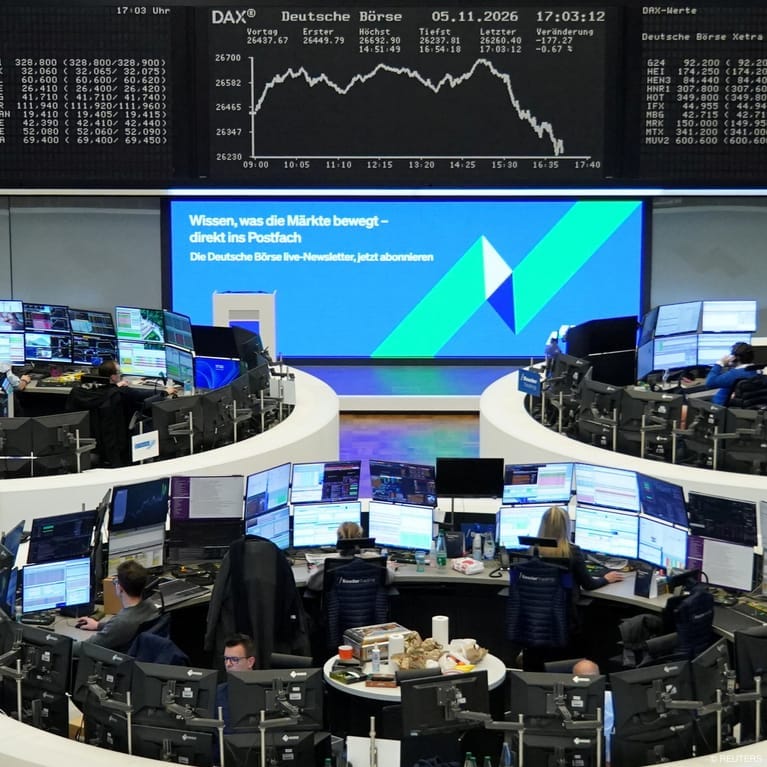
Critical readWhat happened. The European STOXX 600 index fell by 1.6% in the first trading sessions of Thursday following a widespread sell-off that has led to most European markets losing more than 1% compared to their Asian and American counterparts due to a lack of interest in AI stocks.
The pan-European STOXX 600 index fell by 1.6% during early trading on Thursday following a general shift that has led European stocks to lose more than 1% compared to Asian and American counterparts due to lack of interest in AI-related stocks. Among the first to register significant declines were healthcare, pharmaceuticals, and retail stocks, with European markets outperforming their Asian and American peers thanks to less exposure to AI-related stocks. Previously, European markets had managed to better withstand the turbulence from last month's period through lower exposure to AI-related stocks.
In the evening preceding that, Japanese and South Korean stock markets have fallen after a large negative turn on Wall Street, while Taiwan's stocks were hit by an increase of over 8%. To watch this video, make sure you enable JavaScript and install a browser that supports HTML5 videos. American stocks have experienced a significant reversal throughout the previous day due to a strong decline in technology market sectors, particularly those involved in infrastructure construction related to artificial intelligence such as data centers. Active technology stocks lost about 5. 52%, and even suffered losses up to $2. 5 trillion ($2. 23 trillion euros) on the market value, while the S&P 500 fell by 4. 4%.
The rise of midterm election results in the United States has added further concern. Some Democratic governors promised to slow down or halt the construction of data centers in response to growing public opposition to these projects, according to Michael McCarthy, CEO of the online company Moomoo. 'It is evident that there has been a real change in sentiments,' he said. 'Market points of entry often come with strong differences of opinion, and it appears in market direction towards large fluctuations.'
This is what seems to have happened to us—last night's emotional sell-off suggests that we are heading towards something. The European Central Bank has recently tightened monetary policy, indicating a trend toward more restrictive conditions. This could potentially amplify investor uncertainty and further exacerbate market volatility. Moreover, geopolitical conflicts continue to influence global financial markets. Despite these concerns, some analysts argue that the recent reduction in AI stock prices pertains only to a temporary correction and does not represent a fundamental shift in the industry’s trajectory. They assert that the speed of growth and technological advancements within the industry render artificial intelligence inherently vulnerable during periods of volatility.
However, the context remains unclear, with many investors still uncertain about how to approach artificial intelligence actions due to ongoing uncertainties regarding their gains and future stability. As technology continues to develop, it is crucial for companies to demonstrate tangible progress and implementation proof to regain investor confidence. Ultimately, while this reduction in AI action seems to be caused by short-term concerns and market sentiments, it is important to recognize that this trend may be temporary. Investors should remain vigilant but also consider diversifying their portfolios to mitigate potential risks associated with excessive exposure beyond any single sector.
The news that matters, every morning.
Ricevi una selezione ragionata di business, mercati e innovazione.