
BMag Signal · In 30 seconds
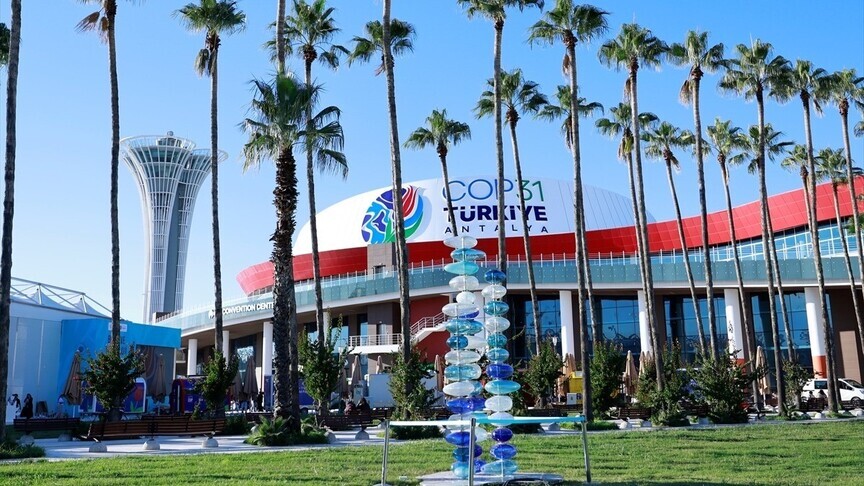
Critical readWhat happened. The 31st Conference of the Parties (COP31) was held at the headquarters of the United Nations Convention to Combat Desertification (UNCCAT). Delegates representing around 198 countries are working actively towards achieving a common understanding that will bring about a 35% global energy consumption through electricity production by 2035, alongside modernizing distribution systems and other objectives. The climate conference organized in Antalya is dominated by discussions on electrification goals, with the aim of improving the global efficiency of energy use in construction projects, increasing by 25%.
At the 31st Conference of the Parties (COP31) conference, representatives from some 198 countries work together to reach consensus on electrification and modernization of distribution networks during their speeches. The climate summit hosted by UNA in Antalya is dominated by discussions on election topics, with the goal of improving global energy efficiency in construction projects of 25%.
The development of the Association for Effective Energy and Management of Tourism (EYODER), based in Istanbul, has been initiated by President Onur Unlu. He stated on the African Daily that the progress in economics and differences in priorities between developing countries' policies are still blocking efforts to reach unanimous agreements. Advanced nations argue they have reached their state through the process of industrialization with environmental contamination, but some advanced nations may be reluctant to provide financial support to developing countries. Unlu specifically pointed out that 'most developed nations are unwilling to offer enough funds to help developing countries adapt to global environmental norms.'
This situation is considered a 'significant problem' and a 'future challenge'. The president of EYODER has added that 'the obligation to protect the environment should be regarded as an inherent duty', but 'it is difficult to find a balance between the need for economic growth and the necessity of protecting our planet.' In anticipation of 198 countries reaching an agreement, it is not easy; it involves a negotiation procedure where countries seek to defend their own demands until the end, but when negotiations conclude, however, agreements are reached on certain issues and results are announced.
An agreement on the 'Global Target for Energy Processing of 35%' would establish a new key foundation for the global energy sector, reminding that this benchmark also coincides with Turkey's current Ministry of Energy goal of achieving 36% electrical processing before 2040. Adopting this metaphor may not immediately transform our lives, but I believe that the obstacles separating us from financial support for investment initiatives will decrease, and ministers will be able to work together to accelerate the implementation of these initiatives; combating climate change is an impossible task to undertake by just one ministry.
The manufacturing industry must systematically address its energy transitions through a sequential approach, focusing on low-consumption energies, implementing efficiency upgrades, and achieving full electrification using this methodical strategy—a strategy he identifies as vital for the construction sector, given that recent European energy security crises have highlighted an urgent need for high-efficiency investments. Starting with energy, modernizing the distribution infrastructure will be crucial to achieve electrification goals.
The renewal of the network system remains a fundamental obstacle, even though industrial installations have transformed into air conditioning units, electricity consumption in homes has increased, and electric vehicle charging stations become more widespread, yet there still exists the need for lines and transformers that distribute power efficiently, intelligently, and digitally. Shifting away from fossil fuels is essential, but it must be done responsibly and sustainably.
The news that matters, every morning.
Ricevi una selezione ragionata di business, mercati e innovazione.