

BMag Signal · In 30 seconds
Critical readWhat happened. The need to invest in sustainable energy is an urgent matter for Southeast Asian nations. This region requires $3.7 billion in financing to achieve its development goals and implement climate-responsible projects.
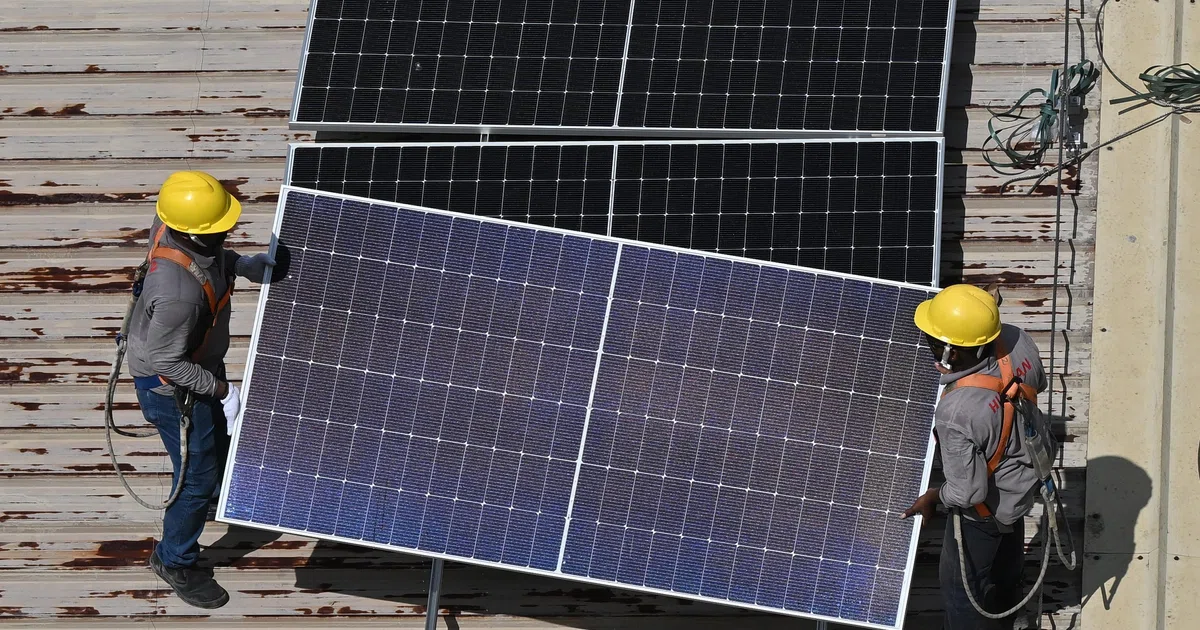
Why Indonesia, the Philippines, and Vietnam require $3.7 billion in financing to achieve their development goals and implement climate-responsible projects. The recent Business Times Singapore investigation has highlighted that Southeast Asian nations, including Indonesia, the Philippines, and Vietnam, will need $3.7 billion in financing to achieve their development goals and implement climate-responsible projects. The report, produced by Convergence and the International Energy Agency, identifies four energy solutions as the most suitable for this sector: rooftop solar, decentralized systems, electric offshore batteries.
These solutions offer additional benefits, such as providing energy to communities that have never had access to energy supply. The sustainable energy solutions have been selected because they can be used effectively through shared financing structures (blended finance). This approach allows mobilizing significant commercial capital, enabling a capital injection that would not be possible without the concession of funds.
Blended finance is a financing method based on investors with a higher preference towards risk – multilateral financial institutions, development finance institutions, philanthropists, and governments – who offer low-priced or low-cost catalytic funding for projects that are not yet bankable but have a journey toward their bankability. The need for this type of financing is due to the large deficit of public financing that Southeast Asian countries are facing to achieve their development goals and implement climate-responsible projects. The investigation has highlighted the opportunity for blended finance in the region of Southeast Asia, where sustainable energy solutions could be used to improve decentralized energy solutions.
Additionally, the use of local guarantee portfolios and risk-sharing instruments can increase the credit available to project developers and operators while reducing the net shift from loss of financiers. As an example, sustainable energy can be provided to rural communities in remote areas through decentralized energy systems. These solutions offer additional benefits such as providing energy to communities that have never had access to energy supply.
Finally, guaranteed credits can reduce the exposure of financiers to the risk of debtors or project, allowing to obtain longer tenors or lower requirements for project placement conditions for larger projects.
The news that matters, every morning.
Ricevi una selezione ragionata di business, mercati e innovazione.
