
BMag Signal · In 30 seconds
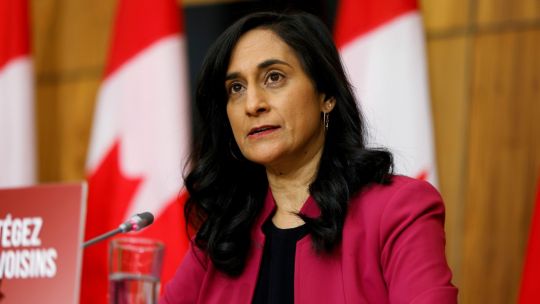
Critical readWhat happened. Six rounds of negotiations led by Brazil have reached a breakthrough, though the final terms remain undisclosed. Canada aims to finalize a free trade agreement with Mercosur by the end of 2026, a goal declared by Canadian Foreign Minister Anita Anand during a visit to Brazil. For Ottawa, this deal is part of a broader strategy to reduce reliance on the United States and strengthen economic ties with other nations. The talks involve Canada and the five members of the South American bloc: Argentina, Bolivia, Brazil, Paraguay, and Uruguay. These discussions had stalled for years before restarting in 2025, coinciding with the U.S. trade war and rising tensions between Ottawa and Washington. Following an encounter in São Paulo with Brazilian Foreign Minister Mauro Vieira, Anand stated that both parties intend to intensify their efforts. The shared objective is to reach a commercially significant agreement as quickly as possible, with the preferred deadline being the end of the year, though no specific timeline for remaining chapters has been set. Canada's project extends beyond Mercosur; Anand noted that over the coming decades, Canada plans to double its trade agreements with partners other than the United States. This long-term goal reflects Ottawa's growing focus on diversification amid strained relations with its neighbor. The source does not specify which other negotiations are included in this program. Conducting Mercosur negotiations is Brazil's third-largest economy in the Americas after the United States and Canada. Vieira reported that delegations have already completed six rounds and that the discussion is proceeding very well. Only a few details remain to be defined by the Brazilian minister, indicating the talks are in an advanced but not yet concluded phase. At least according to the published information, the contents of the already agreed chapters have not been revealed. There are no details on the products involved, potential tariff reductions, application timelines, or sectors benefiting most from the opening. It is also unclear which final issues need resolution. The statements of both ministers show political convergence but do not yet allow for an assessment of the economic impact of the agreement. A possible obstacle concerns Canadian agriculture. Anand acknowledged that the prospect of an agreement with Mercosur has raised concerns in the sector, though she did not specify which sectors are most at risk or what demands producers and agricultural organizations have made. No protective measures were indicated either. The agricultural issue could become significant when the terms of the commercial opening become more defined. The sensitivity of the agricultural dossier also emerges from the previous European reference cited by the source. The negotiations between Mercosur and the European Union were slowed for years by objections from European farmers, fearing competition from less expensive South American products. The disputes also concerned the idea that those goods could be produced under less stringent sanitary rules compared to those applied in the Union. According to the reconstruction of the Buenos Aires Times, the agreement between Mercosur and the European Union was signed in January and temporarily came into force in May, while awaiting European ratification. The reference shows that signing a political deal does not necessarily exhaust the path of a commercial treaty: internal oppositions, approval procedures, and modes of application can continue to influence its timing and effects even after the conclusion of negotiations. Canada and Mercosur thus possess a political deadline and six completed rounds of negotiations, but not yet a definitive text made public. In the coming months, it will be necessary to determine if the few details cited by Vieira can be resolved by the year and what space the Canadian agricultural sector's reserves will have. Only the publication of the terms of the agreement will clarify which markets will actually be open and how significant the diversification announced by Ottawa will be.
Canada and Mercosur Accelerate on Trade Agreement
Six rounds of negotiations led by Brazil have reached a breakthrough, though the final terms remain undisclosed. Canada aims to finalize a free trade agreement with Mercosur by the end of 2026, a goal declared by Canadian Foreign Minister Anita Anand during a visit to Brazil. For Ottawa, this deal is part of a broader strategy to reduce reliance on the United States and strengthen economic ties with other nations. The talks involve Canada and the five members of the South American bloc: Argentina, Bolivia, Brazil, Paraguay, and Uruguay. These discussions had stalled for years before restarting in 2025, coinciding with the U. S. trade war and rising tensions between Ottawa and Washington. Following an encounter in São Paulo with Brazilian Foreign Minister Mauro Vieira, Anand stated that both parties intend to intensify their efforts. The shared objective is to reach a commercially significant agreement as quickly as possible, with the preferred deadline being the end of the year, though no specific timeline for remaining chapters has been set. Canada's project extends beyond Mercosur; Anand noted that over the coming decades, Canada plans to double its trade agreements with partners other than the United States. This long-term goal reflects Ottawa's growing focus on diversification amid strained relations with its neighbor. The source does not specify which other negotiations are included in this program. Conducting Mercosur negotiations is Brazil's third-largest economy in the Americas after the United States and Canada. Vieira reported that delegations have already completed six rounds and that the discussion is proceeding very well. Only a few details remain to be defined by the Brazilian minister, indicating the talks are in an advanced but not yet concluded phase. At least according to the published information, the contents of the already agreed chapters have not been revealed. There are no details on the products involved, potential tariff reductions, application timelines, or sectors benefiting most from the opening. It is also unclear which final issues need resolution. The statements of both ministers show political convergence but do not yet allow for an assessment of the economic impact of the agreement. A possible obstacle concerns Canadian agriculture. Anand acknowledged that the prospect of an agreement with Mercosur has raised concerns in the sector, though she did not specify which sectors are most at risk or what demands producers and agricultural organizations have made. No protective measures were indicated either. The agricultural issue could become significant when the terms of the commercial opening become more defined. The sensitivity of the agricultural dossier also emerges from the previous European reference cited by the source. The negotiations between Mercosur and the European Union were slowed for years by objections from European farmers, fearing competition from less expensive South American products. The disputes also concerned the idea that those goods could be produced under less stringent sanitary rules compared to those applied in the Union. According to the reconstruction of the Buenos Aires Times, the agreement between Mercosur and the European Union was signed in January and temporarily came into force in May, while awaiting European ratification. The reference shows that signing a political deal does not necessarily exhaust the path of a commercial treaty: internal oppositions, approval procedures, and modes of application can continue to influence its timing and effects even after the conclusion of negotiations. Canada and Mercosur thus possess a political deadline and six completed rounds of negotiations, but not yet a definitive text made public. In the coming months, it will be necessary to determine if the few details cited by Vieira can be resolved by the year and what space the Canadian agricultural sector's reserves will have. Only the publication of the terms of the agreement will clarify which markets will actually be open and how significant the diversification announced by Ottawa will be.
The news that matters, every morning.
Ricevi una selezione ragionata di business, mercati e innovazione.